

The real lesson from the viral Phoenix tattoo hospitalization: hygiene failures can become surgical emergencies
Key Takeaways:
» A tattoo infection can escalate to cellulitis, sepsis, and even compartment syndrome when contamination and swelling are severe.
» The viral story is less about “bad luck” and more about process failures: artist vetting, sterile technique, aftercare, and early medical evaluation.
» Social media popularity is not a safety credential; studio sanitation and regulated practice matter more than follower counts.
» If a fresh tattoo is getting rapidly red, hot, swollen, or painful, stop treating it like normal healing and get medical care fast.
» The smartest studios treat infection prevention like engineering: controls, barriers, verification, and documentation.
1. The Phoenix story is viral because it hits every fear at once
The most-shared body art story this week is the Phoenix woman who says a tattoo from an artist she found on social media landed her in the hospital with sepsis, cellulitis, and two surgeries. That is the nightmare scenario everybody in this industry understands on sight: a fresh tattoo that stops being a tattoo problem and becomes a limb-salvage problem. In the reporting, the visible progression was the giveaway, swelling, purple discoloration, escalating pain, and pressure severe enough that doctors discussed compartment syndrome. That’s not “a little irritated skin.” That’s a red alarm. 12 News report on the Phoenix tattoo hospitalization put the human story in front of a massive audience, but the engineering lesson is the same one we repeat in professional piercing and tattooing: contamination plus delayed intervention equals disaster.
What makes this story so viral is that it’s familiar. Everyone has seen the social-media tattoo model: pretty feed, slick reels, thousands of likes, and zero visible proof of sterilization discipline. That’s why the argument around artist vetting matters as much as needle choice. In body art, the process is the product. If the station isn’t controlled, the outcome isn’t controlled. The same logic that governs why needle geometry changes tissue trauma and recovery speed applies here: tiny decisions during skin penetration can decide whether the body settles down or spirals into inflammatory chaos.
And no, this is not just a tattoo issue. We see the same pattern in piercing when people confuse “popular on Instagram” with “competent under pressure.” A studio can make flawless-looking content while still running sloppy hygiene. That is why standards matter, and why practitioners should care about professional piercing hygiene standards and autoclave verification instead of marketing language. If your sterilization logs are clean but your client communication is vague, you’re still running a risk the body will collect on later.
2. The science: infection, pressure, and the point where swelling becomes dangerous
Let’s separate the layers. Cellulitis is a bacterial infection of the skin and soft tissue. Sepsis is the body’s systemic response to infection, and it can become deadly fast. Compartment syndrome is different: pressure builds inside a closed muscle compartment, cutting off circulation and threatening nerves and tissue. A tattoo infection can contribute to that pressure by driving inflammation and fluid accumulation in a limb. That’s why a swollen hand or forearm with severe pain, tightness, and color change is not something to “sleep off.”
Here’s the practical comparison:
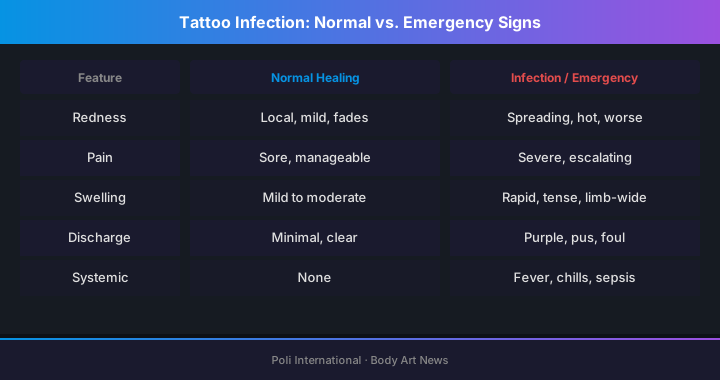
| Feature | Normal tattoo healing | Concerning infection / emergency |
|---|---|---|
| Redness | Local, mild, fades over days | Spreading, hot, worsening |
| Pain | Sore, manageable | Severe, escalating, out of proportion |
| Swelling | Mild to moderate | Rapid, tense, limb-wide |
| Discharge | Small amount of plasma/ink | Pus, odor, increasing drainage |
| Systemic signs | None | Fever, chills, weakness, confusion |
| Action | Standard aftercare | Medical evaluation immediately |
The reason this matters in practice is that the first symptoms are easy to misread. Clients think “it’s just healing.” Some artists, trying to protect their reputation, say “keep washing it.” That’s dangerous if the skin is actually infected. The faster the infection burden increases, the more likely the body is to mount a systemic response. Public health guidance consistently treats fever, spreading redness, and severe pain as red flags for urgent evaluation; the same goes for signs of sepsis in general, which are laid out clearly in the CDC’s sepsis information. The clinical takeaway is simple: once swelling starts affecting function, do not pretend it’s routine aftercare.
For studios, the material lesson is that contamination pathways are predictable. Skin is a barrier until you breach it with needles. After that, your controls have to be better than the environment, not equal to it. That means single-use sharps, proper hand hygiene, surface disinfection, sterile setup discipline, and aftercare instructions that are written plainly enough for a sleep-deprived client to follow. This is also why public health tattoo safety guidance for preventing skin infections deserves to be standard reading in every shop, not an afterthought. A clean-looking workstation is not a sterile workstation. Those are not the same thing, and pretending otherwise is how people end up in the ER.
3. What studios should do differently, down to the operational details
If you run a studio, treat this case as a checklist of failure points. First: screening. If a client tells you they’re immunocompromised, have a history of poor wound healing, are on blood thinners, or are already fighting a skin infection, that is not the time to act fearless. Slow down. Refer out if needed. Second: setup. Surface barriers, fresh gloves, uncontaminated ink caps, and no improvising halfway through the session. Third: needle and ink handling. Anything that touches a non-sterile surface is done. Fourth: aftercare. Give explicit written instructions and a red-flag list. “Call me if you have concerns” is not an instruction; it’s a cop-out.
For artists, the practical threshold is this: if the swelling is expanding, the pain is intensifying, the skin is getting hot, or the area is becoming tight and shiny, tell the client to get medical attention the same day. Don’t try to diagnose sepsis in the shop. Don’t argue that “every tattoo gets red.” And don’t tell clients to keep applying random ointments or home remedies. The body is not impressed by guesswork. In fact, the body usually punishes guesswork.
For clients, the smartest prevention step is boring: choose the artist like you’d choose a surgeon for a minor procedure. Look for visible hygiene protocols, licensing where required, sterile supplies, and a studio that talks openly about infection risk without acting insulted by the question. If an artist is annoyed that you asked about sanitation, that’s your answer. Walk.
4. Patrick's Note: Social media is not a sterilizer
What I’ve seen in studios for decades is this: the flashiest operators often have the weakest systems. They understand engagement. They do not always understand risk control. And body art is nothing if not risk control dressed up as culture. The Phoenix case is exactly why I keep telling people that a smooth Instagram page does not prove a clean needle path. If you want the field to mature, you have to reward boring competence, not just pretty content. Poli Journal: infection control basics every body art studio should be documenting
The other thing practitioners miss is that clients will forgive almost anything except getting hurt because nobody spoke plainly. We don’t need melodrama; we need honest standards. If a wound looks wrong, say so. If the swelling is beyond normal, say so. If a studio can’t show you how it prevents cross-contamination, leave. That’s not paranoia. That’s professional judgment.
5. FAQ: Technical Q&A
Q: How do I tell normal tattoo redness from an infection?
Normal redness stays localized and starts settling over the first few days. Infection tends to spread, feel hotter, hurt more over time, and may produce pus or fever. If the pain is increasing instead of decreasing, that is not routine healing.
Q: Can a tattoo really lead to sepsis?
Yes. A tattoo is a skin breach, and if bacteria get in and multiply, the infection can move beyond the skin. Sepsis is the body’s dangerous systemic response to that infection, and it requires urgent medical care.
Q: When should a client go to urgent care or the ER?
Go immediately if there is rapidly spreading redness, severe swelling, fever, chills, confusion, or pain that feels out of proportion. If the limb is becoming tight, purple, numb, or hard to move, treat it as an emergency. Do not wait for “one more day” of aftercare.
Conclusion: Treat every fresh tattoo like a controlled medical exposure
The Phoenix case is viral because it exposes a truth the industry still pretends not to hear: the difference between a great tattoo and a dangerous one is often invisible at the start. Good body art is not only about line quality or shading. It is about controlling contamination, recognizing abnormal healing early, and refusing to normalize warning signs.
If you work in this field, tighten your protocols. If you’re a client, choose the studio that talks about hygiene with the same confidence it talks about style. And if a fresh tattoo starts looking or feeling wrong, stop scrolling and get help. The next step is not “wait and see.” Poli Journal: tattoo infection warning signs and what studios should tell clients


