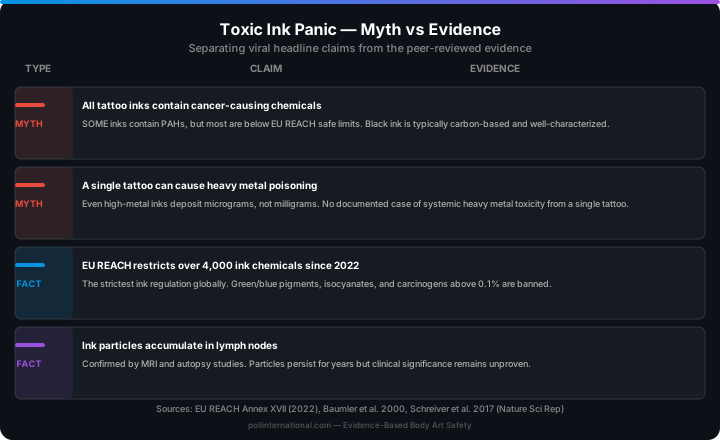
Tattoo ink safety is trending again, here’s the real chemistry behind the scare
Key Takeaways:
» Recent viral “toxic tattoo ink” stories are built on real chemistry but sloppy interpretation of risk.
» The real problems are non-compliant pigments, unknown supply chains, and zero documentation, not ink as a concept.
» Red, yellow, and some colored pigments still carry the highest allergy and photo-reaction risk and need stricter sourcing and client consent.
» Studios that log batch numbers, use REACH-style compliant inks, and give written pigment disclosures are already ahead of the regulators.
» Don’t promise “safe”, promise “traceable, documented, and within current toxicology limits” and back it with paperwork.
1. Why everyone’s suddenly freaking out about “toxic tattoo ink”
In the last two weeks, the most-discussed story across Reddit, TikTok, and YouTube hasn’t been a celebrity face tattoo, it’s clip after clip yelling that tattoo ink causes cancer, auto-immune disease, and systemic inflammation, usually stitched over MRI screenshots and cherry-picked journal quotes. The main academic ammo comes from reviews like a recent open-access paper summarizing immediate, delayed, and long-term adverse reactions to tattooing, including dermatitis, granulomas, systemic inflammation, and possible carcinogenicity from contaminants like lead, mercury, cadmium, cobalt, carbon black, and PAHs (polycyclic aromatic hydrocarbons). These reviews correctly note that pigments can trigger photo-allergic reactions, chronic inflammation, and even sarcoidosis-like changes in some cases, especially in certain colors like red and yellow inks built on older pigment chemistries (clinical review on tattoo adverse reactions).
That’s the part the viral videos quote. The part they ignore is nuance: those same papers emphasize that a lot of the risk profile comes down to pigment chemistry, contamination levels, and production quality, not “all tattoo ink is poison.” You see patterns: red inks with mercury, cadmium, or azo dyes show more allergic reactions; black inks with certain iron oxides or carbon blacks are tied to granulomatous reactions and rare MRI issues; yellow, blue, and purple formulations correlate with specific photo-reactions and sarcoid-type presentations in long-healed tattoos (detailed pigment-specific reaction data).
At the same time, tattoo prevalence has exploded, roughly one in three U.S. adults now has at least one tattoo, and society is far more accepting than 20 years ago, which just means any complication, no matter how rare, now hits a much bigger population base and becomes headline fuel when someone posts it on TikTok. When 32% of adults are tattooed and 22% have multiple tattoos, even low-probability events turn into thousands of cases over time (Pew survey on U.S. tattoo prevalence).
So yes, the science says ink chemistry matters and there are real complications. But the “every tattoo gives you autoimmune disease” narrative is scientifically lazy. The interesting part for professionals is not the panic, it’s the details: which pigments, which contaminants, what limits, and how studios can harden their practice the same way we already harden our needle geometry and trauma profiles to protect healing and long-term skin health in work like the relationship between needle taper angle and dermal cellular regeneration speed.
2. What the data actually says: colors, contaminants, and risk bands
When you strip out the TikTok drama and just read the toxicology, a consistent picture shows up: not all inks are equal, and not all colors carry the same risk. Clinical reviews describe:
- Very common but usually mild: short-term irritation, local inflammation, sometimes infection if hygiene is poor.
- Less common but serious: allergic and granulomatous reactions, often color-linked.
- Rare but headline-friendly: systemic reactions, sarcoidosis, uveitis, enteritis, and suspected links to cancer via known carcinogens in pigments and contaminants (overview of acute vs long-term reactions).
Here’s a simplified breakdown based on the chemistry that keeps showing up in the literature:
| Feature | Black Inks (Carbon/Iron Oxide) | Colored Inks (Red/Yellow/Blue etc.) |
|---|---|---|
| Typical pigment base | Carbon black, iron oxides, occasionally other metal oxides | Azo dyes, mercury/cadmium salts (older reds), cobalt, nickel, titanium dioxide, manganese, copper, etc. |
| Most common issues | Chronic local inflammation, granulomas, rare MRI heating or burning sensation at tattoo site | Allergic reactions (esp. red), photo-allergy, sarcoid-like reactions, chronic inflammatory nodules |
| Key contaminants of concern | PAHs in carbon black, trace metals (lead, arsenic, nickel) | Same contaminants + inherently more reactive pigment chemistries (e.g., azo dyes that can break down into aromatic amines) |
| Documented systemic effects | Granulomatous inflammation, rare systemic sarcoidosis-like disease | Systemic inflammation, uveitis, arthritis, enteritis, sarcoidosis, more frequent persistent complications in some series |
| Regulatory pressure (EU/REACH) | Limits on PAHs, heavy metals, and specific carbon blacks | Heavier scrutiny; bans and limits on certain reds, yellows, and other colors considered more allergenic or carcinogenic precursors |
Clinical data backs this color split: red, black, and green pigments show the highest frequency of hypersensitivity reactions; red inks especially are repeatedly flagged as over-represented in adverse reaction cohorts, particularly those containing mercury, cadmium, or certain azo compounds (pigment-specific hypersensitivity data). Long-term, chronic inflammatory changes including granulomas and fibrosis are documented, along with more systemic inflammatory problems in a minority of patients (long-term complications overview).
Here’s what that means for working artists:
- Color choice is a risk lever, not just an aesthetic one. Saturated reds and some yellows are still the biggest biological wildcard.
- Pigment purity and documentation matter more than marketing. “Vegan” doesn’t tell you anything useful about heavy metals, PAHs, or azo breakdown products.
- Black isn’t magically safe. Carbon black with PAHs and metal contamination can absolutely drive chronic inflammation, especially in giant fields of saturation. The bigger the fill, the more total load you’re planting.
You already think in terms of needle groupings, stroke length, and hand speed to avoid unnecessary trauma; the step we’re collectively behind on is treating ink like a medical device with lot numbers instead of a vibe, the same way we treat internally-threaded titanium jewelry differently from mystery steel in the transition from “316L” as a buzzword to actual implant-grade piercing jewelry standards.
3. The real technical picture: ppm limits, chronic inflammation, and how to future-proof your studio
The reviews blowing up online pull from a decade of dermatology and toxicology data. Some specifics you won’t hear in a 15-second outrage clip:
- Heavy metals and contaminants
Metals like lead, mercury, cadmium, beryllium, arsenic are linked to a laundry list of systemic issues: cardiovascular, gastrointestinal, lung, liver, kidney, endocrine, bone disease, and various cancers when exposure is high and chronic (toxic metal health effects in context of tattoos). REACH and related frameworks respond by setting ppm-level limits, typically in the low tens of ppm for individual metals, in pigments and inks, treating them like industrial chemicals with defined tolerances. The viral videos skip the part where most compliant inks are already engineered to sit below those thresholds, and where the main danger is non-compliant or counterfeit supply.
- Azo colorants and carcinogenic aromatic amines
Some colored pigments (especially older reds and oranges) are azo dyes that can break down under UV or laser exposure into aromatic amines, a class containing some known carcinogens. That is part of why regulations like the EU’s REACH tattoo ink restrictions target specific pigment identifiers, not just vague “chemicals in ink.” When you see a list of banned pigments, it’s usually because of identified breakdown products, not because the industry suddenly discovered “ink is bad.”
- Chronic inflammation as the real long-term enemy
Long-term tattoo ink effects in the literature are rarely “ink directly caused cancer”; they’re more often chronic inflammatory conditions, granulomas, fibrosis, or systemic inflammatory syndromes like uveitis and arthritis that correlate with certain pigments or widespread tattooing (discussion of chronic granulomatous reactions and systemic inflammation). Chronic low-grade inflammation is the slow killer here, and it’s strongly influenced by:
- Pigment particle size and solubility
- Presence of reactive metals and PAHs
- Total pigment load (how much skin, how deep, how dense)
This is the same biological logic you see when we talk about how excessive tissue disruption from wrong needle taper amplifies immune response and slows healing, the core reasoning behind work like the engineering of low-trauma needle configurations for faster dermal recovery.
- Infection versus chemistry
The paper that’s being quoted to scare people about ink chemistry also emphasizes something boring but critical: in poor hygienic conditions there is still a real risk of blood-borne infections like HBV, HCV, and HIV (infection risk under poor hygiene). Most of the developed-world professional scene has done a good job beating this down with basic cross-contamination control, but the global explosion of cheap kits and semi-pro setups keeps this risk alive, and those cases get lumped into “tattoos are dangerous” with zero distinction between a proper studio and a kitchen.
- Adverse event rates
A retrospective series over ten years reported:
- About 70% of 405 tattooed patients presenting to a clinic had acute skin reactions
- 7% had systemic harmful effects
- 6% had persistent complications (clinical cohort data on tattoo complications)
Important nuance: that’s a clinic population, not a random sample of all tattooed people. These are people who already had a problem serious enough to see a doctor. TikTok treats those numbers as “70% of tattooed people have serious reactions,” which is simply wrong.
For studios, the practical implications are clear:
- Demand documentation from ink suppliers. Batch numbers, safety data sheets, explicit compliance with REACH-style heavy metal and PAH limits. If your supplier can’t give you a current SDS and basic toxicology data, that’s your red flag, exactly the same way we treat no-name “surgical steel” in the piercing world.
- Color-specific consent. For large red or yellow areas, spell out the higher allergy and photo-reaction risk in your paperwork. Document pigment brand and batch. That’s not just legal CYA; it’s the baseline standard of informed consent given the current data.
- Think in terms of total load and placement. Giant saturated fields, particularly on photodamaged skin or in immunologically complex clients (autoimmune history, sarcoidosis, etc.), deserve a more conservative pigment choice and a slower build-up over sessions.
- Watch MRI and laser interactions. Some clients will feel burning or pain at tattoo sites during MRI because of metallic content in pigments, especially iron oxides and some colored pigments (MRI reaction reports). They need to know this is a possibility, and you should be ready to answer questions about it.
4. Patrick’s Note: Ink panic is just the needle panic all over again
What I’ve seen in studios over the last decade is the same pattern on repeat: first it was “rotaries will ruin your skin,” then “cartridges aren’t sterile,” then “titanium is dangerous because it has aluminum,” and now we’re back to “all tattoo ink is toxic.” The reality is more boring and more fixable. We already went through this cycle in piercings, for years, everyone slapped “316L” on whatever stainless they were selling and called it implant grade, until people started getting smarter about actual compositional and surface standards for body jewelry and the industry had to catch up with testing and documentation, which is the entire discussion in the implant-grade body jewelry standards and why ‘316L’ isn’t enough any more.
Ink is about five years behind that same curve. A lot of the scare content circulating right now is really aimed at the worst of the supply: off-brand, untested, poorly documented pigments being sold into a global market that will buy whatever is cheapest. That’s where you see contamination, mislabeled colors, and zero traceability. When reviewers talk about “tattoo ink” as if it’s a single homogeneous product, they’re averaging together everything from tightly controlled, REACH-compliant lines to literal mystery bottles on a marketplace listing. You wouldn’t average BioFlex® with PVC ear stretchers and call it “flexible plastic performance”; the same logic applies here.
My honest take: artists who adopt medical-device thinking, lot numbers, SDS files, color-specific informed consent, risk-based pigment choices, are not just safer, they’re commercially future-proofed. Regulators are catching up; they will impose limits and documentation standards whether our side likes it or not. The studios that can already tell a client “this exact bottle, this exact batch, with these ppm limits on heavy metals” will cruise through that shift. The ones still buying whatever’s on sale will be the ones feeding the next viral horror compilation.
5. FAQ: Technical Q&A
Q: Should I stop using red ink altogether given the allergy data?
No, but you should stop treating all reds as equal. Prioritize modern reds that explicitly comply with current REACH pigment restrictions, avoid legacy cadmium/mercury-based formulations, and document brand and batch for every large red piece. For clients with atopy, known dye allergies, or autoimmune history, steer them toward more conservative color choices or smaller red fields with clear written warnings.
Q: Are black inks actually safer than colors, or is that just a myth?
Black inks generally show fewer classic allergy reactions than reds, but they are not automatically “safe.” Carbon blacks can carry PAHs and metal contaminants that drive chronic inflammation and granulomas, especially in large solid fields. The safety difference comes down to specific formulation and purity, not the word “black” on a label.
Q: How should I talk to clients who bring in these viral “toxic ink” videos?
Acknowledge that there are genuine risks, then anchor the discussion in specifics: which pigments are higher risk, what regulations your ink lines comply with, and how you track batch numbers and SDS documentation. Don’t promise zero risk; explain that your practice is built around minimizing known risks and staying within documented toxicology limits in the same way you already manage needle trauma and aseptic technique.
Conclusion: Turn ink panic into better documentation
Viral “toxic tattoo ink” outrage is not going away; it’s too easy to farm views by waving around MRI screenshots and the word “cancer.” The way forward for professionals isn’t to deny the chemistry, it’s to own it: choose pigments with real compliance data, log every batch, build color-specific informed consent into your paperwork, and treat ink as a controlled material, not colored water. The studios that do this now will be the ones clients trust when the next scare cycle hits, just like the early adopters of real implant-grade jewelry standards did in the piercing world, a shift covered in depth in the piece on how implant-grade body jewelry standards are reshaping client expectations and studio liability.
Ink isn’t the enemy; ignorance and anonymity are. If you can tell a client exactly what’s in the bottle, why you chose it, and how it behaves in the body, you’re already operating above the level where most of the horror stories start.