
Body Art Regulation Tracker
12 cited figures tracking the rules that govern body art, EU REACH nickel-release and tattoo-ink restrictions, heavy-metal caps and SVHC disclosure duties. Every figure links to its primary regulatory text or study. Free to quote with attribution.
Body art is regulated through chemical law rather than a single dedicated statute. In the EU that means REACH: nickel-release limits for jewellery, the Entry 75 restriction that rewrote the tattoo-ink palette, heavy-metal caps and the substances-of-very-high-concern list. This page tracks the key figures, limits and enforcement data in one place for journalists, compliance staff and studio professionals. Each statistic links to the regulation or study it comes from.
Reporting on body-art regulation? Jump to the citation block for a ready-to-use reference, or email info@poliinternational.com for expert comment from a material-compliance specialist.
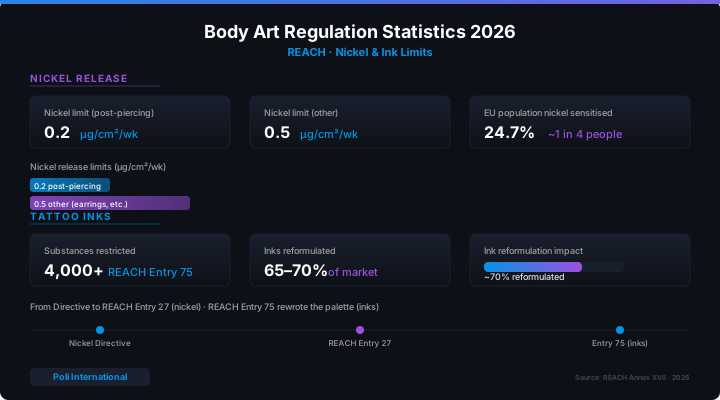
Nickel release: from Directive to REACH Entry 27
The oldest and best-evidenced body-art regulation controls how much nickel an item may release into the skin. It began as the 1994 Nickel Directive and is now REACH Annex XVII Entry 27, measured by the harmonised EN 1811 test method.
EU nickel-release limit for post assemblies inserted into pierced ears and other pierced body parts, the strictest tier of REACH Entry 27.
REACH Annex XVII Entry 27 (EUR-Lex) ↗general nickel-release limit for items in prolonged direct skin contact, such as worn jewellery, watch cases and fasteners.
REACH Annex XVII Entry 27 (EUR-Lex) ↗the Nickel Directive 94/27/EC introduced release limits in 1994; those limits were carried into REACH Entry 27 when REACH took effect, with EN 1811:2011+A1:2015 as the reference test method.
EN 1811 test standard (CEN / EUR-Lex) ↗of European earring posts still exceeded the nickel-release limit in a 2025 review, showing the rules only protect wearers when products actually comply.
von Spreckelsen et al., nickel allergy & piercings (PubMed) ↗Tattoo inks: REACH Entry 75 rewrote the palette
Since 2022 the pigments allowed in tattoo and permanent-makeup inks across the EU have been restricted under REACH. This is the single largest regulatory change the ink supply chain has faced.
hazardous substances restricted in tattoo and permanent-makeup inks under EU REACH Entry 75 (Regulation 2020/2081), adopted December 2020 and effective 4 January 2022.
REACH Entry 75 tattoo-ink restriction (ECHA) ↗of tattoo-ink colours were estimated to be affected by the Entry 75 restriction, forcing large-scale reformulation across the industry.
Chemistry World, tattoo-ink restriction analysis ↗end of the additional transition period for two specific pigments, Pigment Blue 15:3 and Pigment Green 7, giving the supply chain one extra year to find alternatives.
REACH Entry 75 tattoo-ink restriction (ECHA) ↗the US FDA does not premarket-approve tattoo inks; it treats them as cosmetics and acts mainly on contamination, a far lighter regime than the EU REACH restriction.
US FDA, tattoo inks guidance ↗Heavy metals and substances of very high concern
Beyond nickel and inks, several REACH entries cap toxic metals in articles that contact the body, and the SVHC candidate list drives disclosure duties along the supply chain.
cadmium limit in most articles under REACH Entry 23; cadmium is a known carcinogen and its use in jewellery alloys and plastics is tightly restricted.
REACH Annex XVII Entry 23 (EUR-Lex) ↗lead limit for consumer articles supplied to the general public under REACH Entry 63, covering jewellery and many everyday products.
REACH Annex XVII Entry 63 (EUR-Lex) ↗substances on the REACH candidate list of substances of very high concern; any present above 0.1% by weight in an article triggers supply-chain disclosure duties.
ECHA, candidate list of SVHCs ↗the Article 33 threshold: above this concentration of an SVHC in an article, suppliers must pass safe-use information down the chain, and consumers may request it.
ECHA, candidate list of SVHCs ↗Cite this page
These figures are free to reference in articles, presentations and research with attribution. Suggested citation:
Poli International. “Body Art Regulation Tracker (July 2026).” Poli International.
https://poliinternational.com/body-art-regulation-tracker-statistics/
Released under CC BY 4.0. See our full data methodology for how every figure is sourced, verified and licensed. For interviews, data requests or material-compliance commentary, contact info@poliinternational.com.
Frequently asked questions
Are tattoo inks regulated in the EU?
Yes. Since 4 January 2022, tattoo and permanent-makeup inks in the EU are governed by REACH Annex XVII Entry 75 (Regulation 2020/2081), which restricts more than 4,000 hazardous substances. An estimated 65 to 70 percent of ink colours were affected, forcing widespread reformulation. Two specific pigments, Blue 15:3 and Green 7, had an extra transition year that ended 4 January 2023.
What is the EU nickel-release limit for piercings?
REACH Annex XVII Entry 27 sets a nickel-release limit of 0.2 micrograms per square centimetre per week for post assemblies inserted into pierced body parts, and 0.5 for items in prolonged skin contact. The limits originate in the 1994 Nickel Directive and are measured with the harmonised EN 1811 test method. A 2025 review still found about a quarter of earring posts over the limit.
Does the FDA regulate tattoo inks like the EU does?
No. The US FDA does not premarket-approve tattoo inks. It treats them as cosmetics and generally acts only on contamination or safety problems after products reach the market. This is a much lighter regime than the EU REACH Entry 75 restriction, which pre-emptively bans thousands of substances from ink formulations.
Can I cite or reproduce these statistics?
Yes. Every figure links to its primary regulatory text or peer-reviewed source. You are free to quote any statistic with attribution to Poli International and a link to this page, under CC BY 4.0. We keep the tracker current so the citation stays accurate.