
Why Some Skin Over-Heals: Fibroproliferative Scarring After Tattoos and Piercings

A complete clinical reference for body art professionals on keloid and hypertrophic scarring, the TGF-β-driven fibroproliferative cascade, anatomical and genetic risk factors that predict scarring, clinical differentiation of keloid vs hypertrophic scar, studio screening protocols, and regulatory guidance across EU, US, and ASEAN jurisdictions.
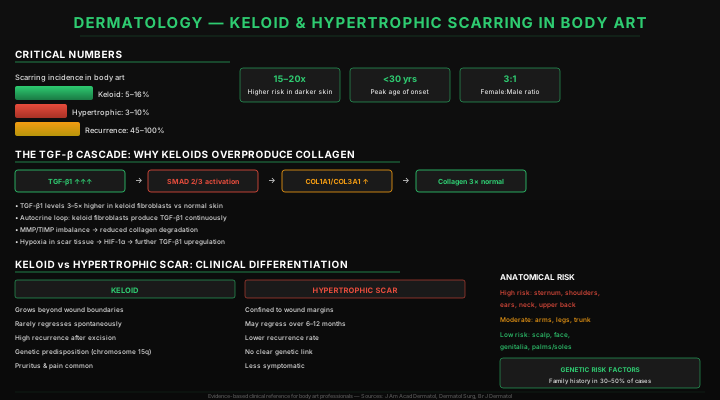
⚡ Quick Reference
Critical Numbers
- Keloid Growth HorizonExtends beyond original wound margin, diagnostic hallmark
- Hypertrophic Scar HorizonRemains within original wound boundary, may regress spontaneously
- Typical Onset, Keloid3–12 months post-injury, may continue growing for years
- Typical Onset, HypertrophicWeeks post-injury, peaks at 3–6 months, often regresses by 12–18 months
- High-Risk Anatomical SitesSternum, shoulders, upper back, earlobes, mandibular angle
- Genetic Prevalence4.5–16% in African, Hispanic, and Asian populations vs ~1% in European-derived populations
- TGF-β1 Concentration in Keloid Tissue3–5× higher than normal dermis (drives fibroblast proliferation)
- Recurrence Rate After Excision Alone45–100%, excision without adjuvant therapy is contraindicated
- Tattoo-Induced KeloidsReported in ~3% of tattoo recipients with keloid diathesis, higher on trunk placements
Key reference values for distinguishing keloid from hypertrophic scarring and assessing baseline risk before a procedure.
Keloid and hypertrophic scarring represent the two most clinically significant fibroproliferative disorders that body art professionals encounter. Both are forms of pathological wound healing in which the normal balance between collagen synthesis and degradation is lost, but they differ profoundly in their natural history, clinical behaviour, and management. Keloids extend beyond the original wound margin like a tumour, rarely regress spontaneously, and carry a recurrence rate approaching 100% after surgical excision alone. Hypertrophic scars remain within the wound boundary, often improve over 12–18 months, and respond better to conservative treatment. For a studio, the distinction matters at the screening stage: a client with a keloid diathesis is a fundamentally different risk proposition.
Body art procedures, tattooing, piercing, scarification, create precisely the kind of dermal injury that can trigger pathological scarring in susceptible individuals. Every needle puncture is a wound; every tattoo is a controlled inflammatory insult to the dermis. The question is not whether inflammation occurs, but whether the client's wound-healing machinery knows when to stop. This page provides the pathophysiological framework, the screening questions, the anatomical risk map, and the evidence base a studio needs to assess risk, set expectations, and recognise when a healing outcome is heading into scar pathology.
The TGF-β Cascade: Why Keloids Overproduce Collagen
The molecular driver of keloid and hypertrophic scar formation is the transforming growth factor-beta (TGF-β) signalling pathway, specifically the TGF-β1 isoform. In normal wound healing, TGF-β1 is transiently upregulated during the inflammatory and proliferative phases, stimulating fibroblasts to deposit collagen, then downregulated as the wound matures. In keloid-prone individuals, TGF-β1 remains persistently elevated, and keloid fibroblasts express 3–5 times more TGF-β receptors than normal dermal fibroblasts, creating a self-amplifying loop.
- »TGF-β1 → Smad2/3 phosphorylation → nuclear translocation → transcription of COL1A1 and COL1A2 genes → Type I collagen overproduction.
- »Keloid fibroblasts are resistant to apoptosis. Normal wound fibroblasts undergo programmed cell death as healing completes; keloid fibroblasts evade this, continuing collagen deposition indefinitely.
- »Hypoxia-inducible factor 1-alpha (HIF-1α) is upregulated in keloid tissue, partly due to microvascular occlusion within the dense collagen mass, creating a hypoxic microenvironment that further drives fibroproliferation.
- »The extracellular matrix in keloids shows a collagen Type I : Type III ratio of ~17:1, compared to ~4:1 in normal skin, the scar is mechanically stiffer, denser, and less elastic than normal dermis.
Keloid vs Hypertrophic Scar: Clinical Differentiation
Differentiating keloid from hypertrophic scar is a clinical skill that determines management. The table below summarises the cardinal features, but the single most reliable criterion is the scar margin: a keloid invades adjacent normal skin; a hypertrophic scar stays within the wound footprint.
- »Keloid: Raised, firm, rubbery, extends beyond original wound edge. Often pruritic (itchy) and painful. Darker pigmentation than surrounding skin. Does not regress. Earlobe keloids may become pedunculated.
- »Hypertrophic scar: Raised but confined to wound boundary. Pink to red initially, fades over time. Less pruritic. Often regresses over 12–18 months. Responds to silicone gel sheeting and pressure therapy.
- »Timeline: Hypertrophic scars typically appear within weeks and peak at 3–6 months. Keloids may appear 3–12 months post-injury and can continue growing for years, a scar still expanding at 12 months is almost certainly a keloid.
- »Anatomical predilection: Keloids favour high-tension anatomical sites (sternum, deltoid, scapula, earlobe, mandible). Hypertrophic scars occur anywhere but are most common over joints and mobile areas.
Genetic and Ethnic Risk Factors
Keloid susceptibility has a strong genetic component that varies by ancestry. This is not about skin colour, it is about fibroblast biology programmed at the genomic level. Studios serving diverse client populations must understand that risk is not uniform.
- »Prevalence: 4.5–16% in populations of African, Hispanic, and Asian ancestry; approximately 1% in populations of European ancestry. These are population-level ranges, individual risk varies within groups.
- »Familial clustering: Keloids show autosomal dominant inheritance with incomplete penetrance. Multiple genomic loci have been identified, including regions on chromosomes 2q23, 7p11, and 10q23.31.
- »Twin studies: Monozygotic twins show higher concordance for keloid formation than dizygotic twins, confirming genetic contribution over environmental exposure alone.
- »The mechanistic link is not melanin content but fibroblast TGF-β receptor density and signalling sensitivity, which are heritable traits independent of pigmentation.
Anatomical Risk Map for Body Art
Not all skin is equal. Anatomical location is the single most important modifiable risk factor the studio can control. High-tension skin under constant mechanical stress, the sternum stretched by respiration, the shoulder pulled by deltoid contraction, the upper back under scapular movement, provides continuous mechanical stimulus to the wound, amplifying TGF-β signalling through mechanotransduction pathways.
- »Highest risk: Sternum/chest, shoulders/deltoid region, upper back/scapular area, mandibular angle, earlobes (especially post-piercing), suprapubic region.
- »Moderate risk: Upper arms, lower back, nape of neck, ankles.
- »Lower risk: Mid-back (less tension than upper), lateral thigh, forearm (volar surface), calf.
- »Piercing-specific: Cartilage piercings (helix, tragus, daith) carry a distinct keloid risk different from soft-tissue piercings. Earlobe keloids are common and can become large and pedunculated.
- »Tattoo-specific: Large, single-session tattoos on the chest or back are higher risk than multiple smaller sessions that allow healing between sittings. Dense packing and overworking high-risk sites amplify inflammation.
Studio Screening and Risk-Management Protocol
A structured screening protocol does not eliminate keloid risk, but it identifies high-risk clients before a procedure, enables informed consent, and documents the studio's due diligence. Follow these steps at consultation.
- 1Ask every client: "Have you or any close family member ever developed a raised scar that grew beyond the original wound?" Include parents and siblings.
- 2Examine previous scars: Ask the client to show any existing scars, surgical, traumatic, acne, or body art. A wide, raised scar that extends beyond its original boundary is a red flag.
- 3Check the proposed site against the anatomical risk map. High-tension sites (sternum, deltoid, upper back) in a client with a positive scar history warrant a frank risk discussion.
- 4For ear piercings in a client with prior keloid history: recommend against cartilage placements. If earlobe, consider a smaller gauge and shorter healing time frame.
- 5For tattoos: recommend a test spot, a small (1–2 cm) tattoo in the proposed anatomical region, observed for 6–12 months before committing to a large piece.
- 6Document the scar history and risk discussion in the client record. Note specific anatomical sites discussed, family history, and the client's acknowledgment of risk.
- 7Photograph the proposed site before the procedure. Baseline images are essential if a scar later develops, they establish whether any pre-existing scarring was present.
- 8Adjust technique: minimise trauma during the procedure. Avoid excessive needle depth, overworking the skin, and prolonged sessions on high-risk sites. Use single-use needles.
- 9Recommend silicone gel sheeting or silicone-based scar gel as first-line prophylaxis, starting 2–3 weeks after the procedure once epithelialisation is complete. Continue for at least 3 months.
- 10Schedule a 4-week follow-up specifically to inspect wound healing. A scar that is elevated, firm, and pruritic at 4 weeks in a high-risk client may benefit from early intralesional corticosteroid referral.
- 11Refer early: any scar that is expanding beyond the wound margin at 8–12 weeks should trigger referral to a dermatologist. Intralesional triamcinolone (Kenalog) is first-line treatment, do not delay.
- 12Never excise a keloid in-studio. Surgical excision alone has a 45–100% recurrence rate and should only be done by a dermatologist or plastic surgeon, typically with adjuvant radiotherapy or corticosteroid injection.
Common Errors and Failure Modes
These are the most frequent mistakes studios make in assessing and managing keloid risk, and the clinical consequences of each.
- ✕Assuming keloids are purely cosmetic: Keloids can cause severe pruritus, pain, restriction of movement (especially over joints), and significant psychological distress. Dismissing them as "just a scar" underestimates their impact.
- ✕Proceeding on a high-risk anatomical site without scar history screening: A first-time keloid can be triggered by a single procedure. Screening must happen before every procedure, not only when the client volunteers a history.
- ✕Confusing hypertrophic scar with keloid: Recommending "wait and see" for what is actually an expanding keloid delays effective treatment. If the scar crosses the original wound boundary at any point, it is a keloid.
- ✕Overworking high-risk skin: Excessive needle passes, high-density packing, and prolonged sessions increase dermal trauma and inflammatory load, all of which amplify TGF-β signalling in susceptible individuals.
- ✕Piercing with jewellery too heavy or too small a gauge: Heavy jewellery exerts constant mechanical tension on a healing fistula, a potent stimulus for scar formation. Undersized gauges can create a cheese-wire effect through tissue.
- ✕Recommending topical vitamin E or onion extract as scar treatment: Evidence for these is weak to absent. Silicone gel sheeting has the strongest evidence base for scar prophylaxis and should be first-line.
- ✕Excising a keloid in a non-medical setting: This converts a keloid into a larger keloid. Keloid excision requires a controlled medical environment with adjuvant therapy, it is outside scope of practice for body art studios.
- ✕Failure to document: A missing scar history in client records leaves the studio exposed if a keloid develops. Documentation of screening, risk discussion, and informed consent is essential medico-legal protection.
Regulatory Framework by Jurisdiction
Scar management sits at the intersection of body art regulation and medical practice. Studios must understand where their scope ends and referral begins. The regulatory environment varies significantly by jurisdiction.
- UK Health and Care Professions Council (HCPC): Scar management including intralesional corticosteroid injection is a medical act, outside body art scope of practice.
- NICE Clinical Knowledge Summary: Keloid and hypertrophic scar, provides first-line treatment pathway: silicone gel, intralesional steroid, pressure therapy.
- British Association of Dermatologists (BAD): Published patient information on keloid scarring with treatment escalation guidance.
- EU Medical Device Regulation (MDR) 2017/745: Silicone gel sheeting classified as Class I medical device, studios can recommend but must not supply.
- UK Local Authority body art licensing: Most jurisdictions require client record-keeping including medical history, scar history falls under this requirement.
- State-level body art regulation: Most states require written informed consent and medical history screening, scar diathesis is a material fact for consent.
- FDA: Silicone gel sheeting products (e.g. ScarAway, Biodermis) are 510(k)-cleared Class I devices for scar management. Studios may recommend but not dispense.
- American Academy of Dermatology (AAD): Published clinical guidelines on keloid management, intralesional triamcinolone first-line, excision with adjuvant therapy for refractory cases.
- OSHA 29 CFR 1910.1030: Bloodborne Pathogens Standard does not directly address scarring but requires documentation of all procedures and complications.
- Texas DSHS Body Art Rules (§229.405): Explicitly requires client health history including "history of keloid formation" before any body art procedure.
- Thailand Ministry of Public Health: Body art studios regulated under the Public Health Act. Client health screening required but keloid-specific protocol not standardised.
- Singapore MOH: Body piercing establishments licensed under Environmental Public Health Act, informed consent and medical screening required.
- Australian Therapeutic Goods Administration (TGA): Silicone gel products registered as Class I medical devices. ARTG listing required for supply.
- ASEAN Cosmetic Directive: Does not cover scar management products, scar treatment falls under medical device or pharmaceutical regulation in most member states.
Patrick's Note
"Before I tattoo or pierce anyone on the sternum, shoulder, or upper back, I ask one question: "Do you have a family member whose scars grew bigger than the cut?" If they say yes, or they don't know, I slow everything down. I show them photos of keloids on the same anatomical site. I explain that my test-spot policy exists because I cannot undo a keloid and neither can most dermatologists without significant intervention. One rule I enforce without exception: if a client has a documented keloid on the proposed anatomical region, I decline the procedure and refer. It is the single most unambiguous refusal criterion in my practice. Your screening question is your best defence, against a bad outcome and against a complaint."
Founder & Piercing Expert
Poli International
Technical Specifications
| Parameter | Standard / Value |
|---|---|
| Keloid Defining Feature | Extends beyond original wound margin |
| Hypertrophic Scar Defining Feature | Confined to original wound boundary |
| Keloid TGF-β1 Concentration | 3–5× higher than normal dermis |
| Collagen Type I : Type III Ratio (Keloid) | ~17:1 (vs ~4:1 normal skin) |
| Keloid Prevalence, African Ancestry | 4.5–16% |
| Keloid Prevalence, European Ancestry | ~1% |
| Recurrence After Excision Alone | 45–100% |
| Keloid Onset Window | 3–12 months post-injury |
| Hypertrophic Scar Regression | Often regresses by 12–18 months |
| Highest-Risk Anatomical Sites | Sternum, deltoid, upper back, earlobes |
| First-Line Scar Prophylaxis | Silicone gel sheeting, 3 months minimum |
| First-Line Keloid Treatment (Medical) | Intralesional triamcinolone (Kenalog) |
References
- [1]DermNet NZ, Hypertrophic Scars and Keloids: A Complete Overview. https://dermnetnz.org/topics/keloid-and-hypertrophic-scarhttps://dermnetnz.org/topics/keloid-and-hypertrophic-scar
- [2]StatPearls (NCBI Bookshelf), Keloid. https://www.ncbi.nlm.nih.gov/books/NBK507899/https://www.ncbi.nlm.nih.gov/books/NBK507899/
- [3]American Academy of Dermatology, Keloids: Overview. https://www.aad.org/public/diseases/a-z/keloids-overviewhttps://www.aad.org/public/diseases/a-z/keloids-overview
- [4]NHS (UK), Keloid Scars. https://www.nhs.uk/conditions/keloid-scars/https://www.nhs.uk/conditions/keloid-scars/
- [5]PubMed, Keloid Pathogenesis and Treatment (Betarbet & Orenstein, 2021). https://pubmed.ncbi.nlm.nih.gov/30085507/https://pubmed.ncbi.nlm.nih.gov/30085507/
- [6]PMC, Keloid Disorder: Pathogenesis and Management (PMC10051587). https://pmc.ncbi.nlm.nih.gov/articles/PMC10051587/https://pmc.ncbi.nlm.nih.gov/articles/PMC10051587/
- [7]Medscape, Keloids: Practice Essentials, Epidemiology. https://emedicine.medscape.com/article/1298013-overviewhttps://emedicine.medscape.com/article/1298013-overview
- [8]UpToDate, Keloids and Hypertrophic Scars. https://www.uptodate.com/contents/keloids-and-hypertrophic-scarshttps://www.uptodate.com/contents/keloids-and-hypertrophic-scars
- [9]Association of Professional Piercers (APP), Safe Piercing. https://safepiercing.org/https://safepiercing.org/
- [10]PMC, Keloid Pathophysiology: TGF-β and Beyond (PMC6834930). https://pmc.ncbi.nlm.nih.gov/articles/PMC6834930/https://pmc.ncbi.nlm.nih.gov/articles/PMC6834930/
- [11]Healthline, Keloids: Causes, Symptoms, and Treatment. https://www.healthline.com/health/keloidshttps://www.healthline.com/health/keloids
- [12]MedlinePlus, Keloids. https://medlineplus.gov/ency/article/000849.htmhttps://medlineplus.gov/ency/article/000849.htm
- [13]MSD Manuals, Keloids (Consumer Version). https://www.msdmanuals.com/home/skin-disorders/noncancerous-skin-growths/keloidshttps://www.msdmanuals.com/home/skin-disorders/noncancerous-skin-growths/keloids
Put Science Into Practice
This technical standard is the architectural foundation for our professional analytical tools.