
Staph, Pseudomonas and Atypical Mycobacteria: Reading the Early Signs

Post-procedure infections in body art present across a spectrum from mild local cellulitis to life-threatening sepsis. The key clinical skill is distinguishing normal healing inflammation, erythema, mild oedema, serous discharge resolving within 72 hours, from early infection requiring intervention. Three organism groups dominate: Staphylococcus aureus (including MRSA) in soft tissue, Pseudomonas aeruginosa in cartilage piercings (perichondritis), and non-tuberculous mycobacteria (NTM) from contaminated ink or water sources. Each has a distinct timeline, presentation, and antibiotic sensitivity profile. Studios that can recognise the early signs and refer appropriately prevent minor infections from becoming surgical emergencies.
⚡ Quick Reference
Critical Numbers
- Normal healing inflammatory windowerythema and mild oedema peak at 24-48 hours, resolve by 72 hours, persistence beyond 72h is the first infection signal
- S. aureus colonisation rate (general population)20-30% nasal carriage; the artist's hands and the client's skin are the primary contamination sources
- MRSA community prevalence1-3% in most developed countries; up to 10% in some regions, assume MRSA until culture results return
- Pseudomonas auricular perichondritis onsettypically 4-10 days post-procedure; presents as painful, erythematous, warm auricle with loss of normal cartilage contour
- NTM infection latency2-8 weeks post-procedure, the long incubation period is the key diagnostic clue; presents as indolent papules/nodules without systemic symptoms
- Fever with piercing/tattoo infectiontemperature >38.0°C indicates systemic involvement, immediate medical referral required
- Lymphangitic streakingred streaks tracking proximally from the site indicate bacterial spread via lymphatics, emergency referral
- Cartilage infection complicationscauliflower ear deformity if untreated >7 days; permanent structural damage within 2-3 weeks of untreated perichondritis
- Blood culture positivity in tattoo-associated sepsis<5% of local infections progress to bacteraemia, but mortality rate in septic shock is 20-30%
- Topical antibiotic efficacy (over-the-counter)virtually zero for established dermal infection, do not recommend OTC antibiotic creams as first-line treatment
Diagnostic and triage benchmarks for post-procedure body art infections. These values distinguish normal healing from pathology requiring intervention.
Every piercer and tattoo artist will encounter infection in their career. The question is not whether it will happen, even with perfect aseptic technique, the skin is colonised and the procedure creates a portal of entry. The question is whether the studio recognises it early enough to prevent a minor local infection from becoming a surgical emergency. The difference between "come back in two days if it is not better" and "go to the emergency department now" is the most important clinical judgement a body art professional makes. This pillar provides the microbiology to make that judgement accurately.
Staphylococcus aureus: The Universal Pathogen
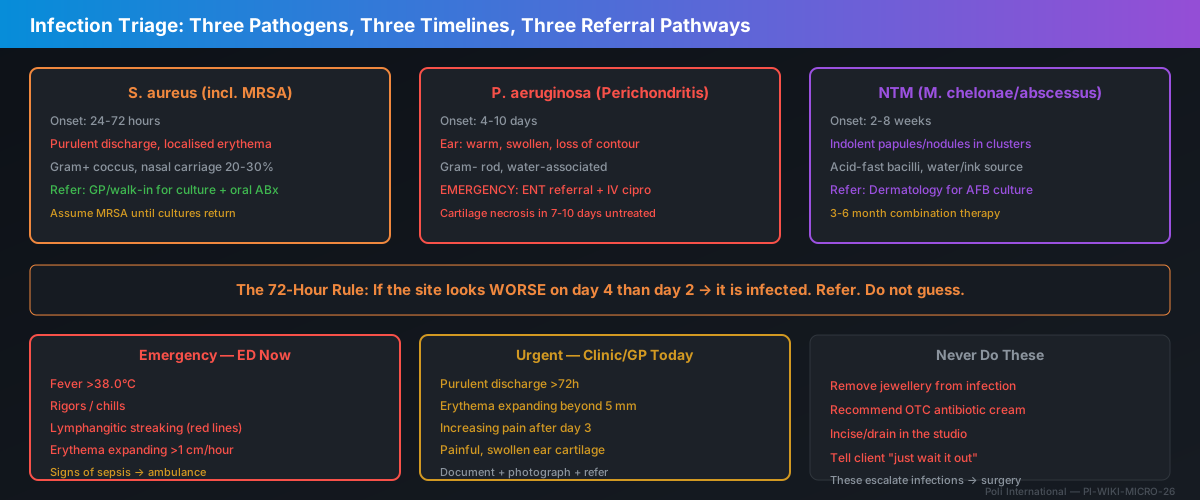
S. aureus is a Gram-positive coccus that colonises the anterior nares of 20-30% of the general population and can survive on dry surfaces for weeks. It is the most common cause of post-piercing and post-tattoo soft tissue infection, typically presenting 24-72 hours after the procedure. The classic presentation is localised erythema, warmth, purulent discharge (yellow-green, odorous), and increasing pain, distinct from the serous, non-odorous discharge of normal healing. Community-acquired MRSA (CA-MRSA) is clinically indistinguishable from methicillin-sensitive S. aureus (MSSA) but requires different antibiotic therapy. The emergence of CA-MRSA means that empirical oral antibiotics (cephalexin, flucloxacillin) may fail in 30-50% of community-acquired skin infections in high-prevalence areas. Studios should assume MRSA until culture results are available and ensure that referral letters to GPs or emergency departments specifically note "possible MRSA, wound culture and sensitivity requested."
Pseudomonas aeruginosa: The Cartilage Destroyer
Pseudomonas aeruginosa is a Gram-negative, aerobic rod that thrives in moist environments, water baths, ultrasonic cleaners, contaminated aftercare solutions, and inadequately dried autoclave loads. It has a particular affinity for damaged cartilage, making auricular (ear cartilage) piercings the highest-risk site. Pseudomonas perichondritis presents 4-10 days after the procedure with a constellation of findings: exquisite tenderness disproportionate to visible erythema, a warm and swollen auricle, loss of the normal cartilage contour (the ear looks "thick" or "puffy"), and a characteristic green-blue exudate in advanced cases due to pyocyanin production. This is a medical emergency. Untreated perichondritis progresses to chondritis (cartilage infection) within 7-10 days, causing irreversible necrosis that produces cauliflower ear deformity. Treatment requires systemic anti-pseudomonal antibiotics (ciprofloxacin is first-line in adults) and often surgical debridement. No topical treatment is adequate. The diagnostic error that costs ears: mistaking Pseudomonas perichondritis for a "normal healing cartilage piercing" because the onset is gradual and the client does not appear systemically unwell. By the time the ear is visibly deformed, the cartilage is already necrotic.
Non-Tuberculous Mycobacteria: The Slow Imposter
NTM (M. chelonae, M. abscessus, M. fortuitum) are environmental organisms found in water, soil, and biofilms. They contaminate tattoo inks and piercing equipment through non-sterile water sources, tap water used to dilute inks, contaminated ink batches, or inadequate sterilisation. The key diagnostic feature is the incubation period: NTM infections present 2-8 weeks after the procedure, long after the client and artist have stopped monitoring the site. The presentation is indolent: small, erythematous papules or nodules that appear in clusters within the tattoo or around the piercing, with little to no systemic symptoms. They are often misdiagnosed as allergic reactions, granulomatous inflammation, or keloids. The clinical clue is that the lesions persist and slowly expand over weeks without responding to standard antibiotics (NTM are intrinsically resistant to most beta-lactams and cephalosporins). Diagnosis requires skin biopsy with acid-fast bacilli stain and mycobacterial culture (which takes 2-6 weeks). Treatment involves 3-6 months of combination antibiotic therapy (clarithromycin + amikacin or ciprofloxacin depending on species and sensitivity). Studios should be aware that NTM outbreaks from contaminated ink have been documented by the CDC, if multiple clients from the same ink batch or studio develop delayed papular reactions, NTM should be the primary suspect.
The Healing-Inflammation-Infection Distinction
The single most important clinical skill in body art aftercare is distinguishing normal healing from early infection. Normal healing inflammation is characterised by: mild erythema confined to within 5 mm of the wound margin, mild oedema peaking at 24-48 hours, clear or slightly blood-tinged serous discharge that decreases over 72 hours, and pain that is proportional to the procedure and improves daily. Early infection is characterised by: expanding erythema beyond 5 mm from the wound margin (and particularly beyond 24 hours), purulent or odorous discharge, increasing pain after 48 hours, local warmth disproportionate to surrounding skin, and, critically, persistence or worsening of any of these findings beyond the 72-hour mark. The 72-hour rule is the most reliable single discriminator: if the site looks worse at day 4 than day 2, it is infected until proven otherwise. Fever (>38.0°C), rigors, lymphangitic streaking, or rapidly expanding erythema (>1 cm/hour) indicate systemic involvement and require immediate emergency department referral, these are signs of impending sepsis, not "a bad healing reaction."
Studio Infection Triage Protocol
A systematic approach to assessing, documenting and referring post-procedure infections. This protocol is designed for non-medical professionals, its purpose is recognition and referral, not treatment.
- 1At first client contact about a potential infection: ask three triage questions, (1) When was the procedure? (2) What are the symptoms and when did they start? (3) Do you have a fever or feel generally unwell?
- 2If fever (>38°C), rigors, confusion, or rapidly spreading redness (>1 cm/hour): stop, this is a medical emergency. Instruct the client to go to the emergency department immediately. Do not attempt in-studio assessment.
- 3If procedure was 2-8 weeks ago with indolent papules/nodules: suspect NTM, refer to dermatology or infectious disease with a note: "Possible NTM infection, delayed presentation post-tattoo/piercing, request AFB stain and mycobacterial culture"
- 4If procedure was 4-10 days ago with painful, swollen ear cartilage: suspect Pseudomonas perichondritis, emergency ENT referral; note "Auricular perichondritis post-piercing, Pseudomonas suspected, needs systemic ciprofloxacin"
- 5If procedure was 1-3 days ago with purulent discharge and localised erythema: suspect S. aureus, refer to GP or walk-in clinic for wound culture and oral antibiotics; note the possibility of MRSA if in a high-prevalence area
- 6Document all findings: photograph the site (with client consent), record timeline, symptoms, and any antibiotics already taken. This documentation protects both the client and the studio.
- 7Never recommend OTC topical antibiotics: they do not penetrate established dermal infection and may select for resistant organisms
- 8Never incise, drain, or "clean out" an infected piercing in the studio: this converts a contained infection into a disseminated one and exceeds the scope of non-medical practice
- 9Follow up within 48 hours if referred to primary care: confirm the client was seen, cultures were taken, and antibiotics were started
- 10Report confirmed infections to the relevant health authority if they meet notifiable disease criteria (NTM clusters, MRSA outbreaks), this is a professional and often legal obligation
Critical Mistakes That Escalate Infections
These errors convert manageable local infections into surgical emergencies or disseminated disease.
- ✕Dismissing a painful, swollen ear cartilage piercing as "normal healing" at day 7: by day 10 the cartilage is necrotic and the ear is permanently deformed, Pseudomonas perichondritis never resolves without systemic antibiotics
- ✕Recommending OTC antibiotic ointment (bacitracin, neomycin, mupirocin) for an established dermal infection: these do not penetrate beyond the superficial epidermis and create a false sense of treatment
- ✕Removing jewellery from an infected piercing: this allows the entry and exit holes to close, trapping the infection inside a sealed subcutaneous pocket that requires surgical drainage
- ✕Assuming MRSA is rare: community prevalence is 30-50% in some regions, every purulent skin infection should be treated as possible MRSA until culture results
- ✕Using tap water to dilute tattoo inks or clean equipment: NTM and Pseudomonas are ubiquitous in water systems, sterile water or bacteriostatic saline only
- ✕Failing to report an NTM cluster: if three or more clients from the same studio develop delayed papular reactions, this is an outbreak that requires public health investigation
- ✕Treating NTM infection with standard short-course antibiotics: NTM requires 3-6 months of combination therapy, a 7-day course of cephalexin will do nothing
- ✕Allowing a client with lymphangitic streaking to drive themselves home: this is a sign of bacterial lymphatic dissemination, they need ambulance transport or immediate escort to the emergency department
Infection Reporting and Public Health Obligations
Regulatory requirements for infection surveillance, reporting, and outbreak management in body art settings.
- ECDC: Healthcare-associated infection surveillance network, NTM outbreaks and MRSA clusters may require reporting through national health protection agencies
- UKHSA (UK Health Security Agency): Body art-associated infections are notifiable if they meet outbreak criteria (>2 epidemiologically linked cases); individual cases are not notifiable
- RIVM (Netherlands): Tattoo-associated NTM outbreaks have been documented and investigated; water quality in tattoo studios is regulated
- EU Cosmetics Regulation: Adverse reactions to tattoo inks (including infections) should be reported through national cosmetovigilance systems
- Local authority licensing: Most EU member states require body art studios to maintain infection incident logs as a condition of licensing
- CDC: Tattoo-associated NTM outbreaks are tracked; the CDC has published multiple outbreak investigation reports (2012, 2015, 2019) linking contaminated ink and non-sterile water
- State health departments: Infection reporting requirements vary by state; some require reporting of any infection associated with a licensed body art facility
- OSHA Bloodborne Pathogens Standard (29 CFR 1910.1030): Requires documentation of exposure incidents and post-exposure evaluation, applies to needlestick injuries and bloodborne pathogen exposure
- FDA MedWatch: Voluntary adverse event reporting for cosmetic products including tattoo inks; MoCRA 2022 now requires mandatory reporting for serious adverse events
- Local health departments: Typically have authority to inspect body art facilities and investigate infection complaints; specific powers vary by county and municipality
- WHO Western Pacific Region: Antimicrobial resistance surveillance networks include community-acquired MRSA, body art-associated infections contribute to community AMR data
- Australia: NTM infections are notifiable in most states/territories; tattoo-associated clusters investigated by state health departments
- Thailand Ministry of Public Health: Body art studio licensing includes infection control standards; adverse events reportable to provincial health offices
- Singapore MOH: Healthcare-associated infection surveillance extended to community settings; NTM outbreaks investigated under the Infectious Diseases Act
- ASEAN harmonisation: No unified body art infection reporting standard exists; each member state applies its own communicable disease legislation
Patrick's Note
"I have seen a cartilage piercing infection that was dismissed as 'just irritated' for ten days. The client lost half her helix, not to the infection itself, but to the delay in treatment. Pseudomonas does not wait. The 72-hour rule is the best diagnostic tool a piercer has: if it looks worse on day 4 than day 2, it is infected. Refer. Do not guess. Do not recommend a cream. Do not remove the jewellery. Pick up the phone and make the appointment for them. That one phone call is the difference between a course of oral antibiotics and a surgical debridement. Our Reaction Triage Wizard at `/tools/` walks through these questions step by step. Use it. And read our Infection & Aftercare articles at `/blog/?category=Infection%20%26%20Aftercare`."
Founder & Piercing Expert
Poli International
**Related Topics**
- »Wound Healing Biology, `/wiki/wound-healing-biology/`
- »Bloodborne Pathogens and Exposure Control, `/wiki/bloodborne-pathogens-exposure/`
- »Autoclave Sterilization Standards, `/wiki/autoclave-sterilization/`
- »Contact Dermatitis and Patch Testing, `/wiki/contact-dermatitis-patch-testing/` (coming soon)
- »Infection & Aftercare (Journal), `/blog/?category=Infection%20%26%20Aftercare`
Technical Specifications
| Parameter | Standard / Value |
|---|---|
| Normal healing inflammatory window | Peak 24-48h; resolution by 72h, persistence beyond 72h = infection signal |
| S. aureus nasal carriage rate | 20-30% of general population |
| MRSA community prevalence | 1-10% depending on region; up to 50% in high-risk populations |
| Pseudomonas perichondritis onset | 4-10 days post-procedure |
| NTM infection latency | 2-8 weeks post-procedure, the key diagnostic clue |
| Fever threshold for systemic involvement | >38.0°C, immediate medical referral |
| Cartilage necrosis timeline (untreated) | Irreversible within 2-3 weeks of untreated Pseudomonas perichondritis |
| Cauliflower ear deformity window | >7 days without treatment |
| Tattoo sepsis mortality rate | 20-30% if progression to septic shock |
| NTM treatment duration | 3-6 months combination antibiotic therapy |
| Emergency referral signs | Fever >38°C, rigors, lymphangitic streaking, erythema expanding >1 cm/hour |
| NTM outbreak threshold | ≥3 epidemiologically linked cases, public health investigation required |
| Topical antibiotic penetration depth | Superficial epidermis only, ineffective for established dermal infection |
| S. aureus infection typical onset | 24-72 hours post-procedure |
| MRSA empirical antibiotic failure rate | 30-50% in high-prevalence areas when using beta-lactam antibiotics |
References
- [1]Tong SY, Davis JS, Eichenberger E, Holland TL, Fowler VG. Staphylococcus aureus infections: epidemiology, pathophysiology, clinical manifestations, and management. Clin Microbiol Rev. 2015 Jul;28(3):603-61. PMID: 26016486. https://pubmed.ncbi.nlm.nih.gov/26016486/https://pubmed.ncbi.nlm.nih.gov/26016486/
- [2]David MZ, Daum RS. Community-associated methicillin-resistant Staphylococcus aureus: epidemiology and clinical consequences of an emerging epidemic. Clin Microbiol Rev. 2010 Jul;23(3):616-87. PMID: 20610826. https://pubmed.ncbi.nlm.nih.gov/20610826/https://pubmed.ncbi.nlm.nih.gov/20610826/
- [3]Prasad HK, Sreedharan S, Prasad HS, Meyyappan MH, Harsha KS. Perichondritis of the auricle and its management. J Laryngol Otol. 2007 Jun;121(6):530-4. PMID: 17319983. https://pubmed.ncbi.nlm.nih.gov/17319983/https://pubmed.ncbi.nlm.nih.gov/17319983/
- [4]Kennedy BS, Bedard B, Younge M, et al. Outbreak of Mycobacterium chelonae infection associated with tattoo ink. N Engl J Med. 2012 Sep 13;367(11):1020-4. PMID: 22970950. https://pubmed.ncbi.nlm.nih.gov/22970950/https://pubmed.ncbi.nlm.nih.gov/22970950/
- [5]Griffith DE, Aksamit T, Brown-Elliott BA, et al. An official ATS/IDSA statement: diagnosis, treatment, and prevention of nontuberculous mycobacterial diseases. Am J Respir Crit Care Med. 2007 Feb 15;175(4):367-416. PMID: 17277290. https://pubmed.ncbi.nlm.nih.gov/17277290/https://pubmed.ncbi.nlm.nih.gov/17277290/
- [6]CDC. Tattoo-associated nontuberculous mycobacterial skin infections, multiple states, 2011-2012. MMWR Morb Mortal Wkly Rep. 2012 Aug 24;61(33):653-6. PMID: 22914227.
- [7]Dieckmann R, Boone I, Brockmann SO, et al. The risk of bacterial infection after tattooing. Dtsch Arztebl Int. 2016 Oct 7;113(40):665-671. PMID: 27788747. https://pubmed.ncbi.nlm.nih.gov/27788747/https://pubmed.ncbi.nlm.nih.gov/27788747/
- [8]Kluger N. Cutaneous infections related to permanent tattooing. Curr Probl Dermatol. 2015;48:136-41. PMID: 25833636.
- [9]Serup J, Carlsen KH, Sepehri M. Tattoo complaints and complications: diagnosis and clinical spectrum. Curr Probl Dermatol. 2015;48:48-60. PMID: 25833625.
- [10]OSHA Bloodborne Pathogens Standard. 29 CFR 1910.1030. https://www.osha.gov/laws-regs/regulations/standardnumber/1910/1910.1030https://www.osha.gov/laws-regs/regulations/standardnumber/1910/1910.1030
- [11]ECDC. Surveillance of communicable diseases in the European Union. European Centre for Disease Prevention and Control. https://www.ecdc.europa.eu/en/surveillance-and-disease-datahttps://www.ecdc.europa.eu/en/surveillance-and-disease-data
- [12]CDC. Guideline for Disinfection and Sterilization in Healthcare Facilities, 2008 (updated 2019). https://www.cdc.gov/infection-control/hcp/disinfection-sterilization/https://www.cdc.gov/infection-control/hcp/disinfection-sterilization/
- [13]WHO. Guidelines on Hand Hygiene in Health Care. World Health Organization, 2009. https://www.who.int/publications/i/item/9789241597906https://www.who.int/publications/i/item/9789241597906
- [14]Singer AJ, Talan DA. Management of skin abscesses in the era of methicillin-resistant Staphylococcus aureus. N Engl J Med. 2014 Mar 13;370(11):1039-47. PMID: 24620867. https://pubmed.ncbi.nlm.nih.gov/24620867/https://pubmed.ncbi.nlm.nih.gov/24620867/
- [15]Stevens DL, Bisno AL, Chambers HF, et al. Practice guidelines for the diagnosis and management of skin and soft tissue infections: 2014 update by IDSA. Clin Infect Dis. 2014 Jul 15;59(2):e10-52. PMID: 24973422. https://pubmed.ncbi.nlm.nih.gov/24973422/https://pubmed.ncbi.nlm.nih.gov/24973422/
Put Science Into Practice
This technical standard is the architectural foundation for our professional analytical tools.