Body Art Pain Science: Why Placement Determines What You Feel
Key Takeaways:
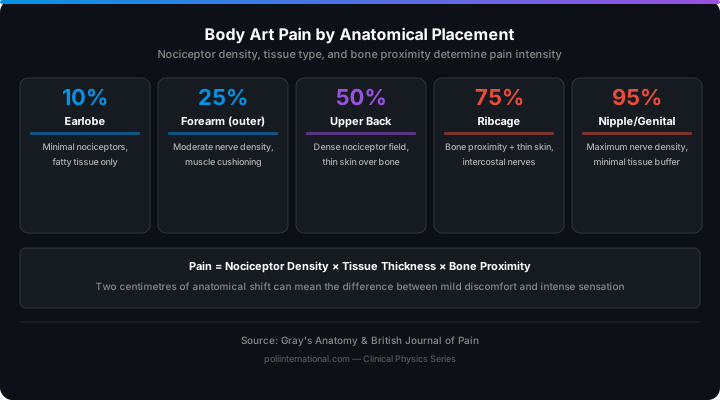
>> Pain in tattooing and piercing is not random, it follows anatomy: nociceptor density, tissue type, and bone proximity determine intensity
>> Two centimetres of movement can mean the difference between mild discomfort and white-knuckle endurance, the reason is anatomy, not mystique
>> Understanding what normal procedural pain feels like helps both artist and client recognise abnormal pain, the kind that signals nerve contact, infection, or incorrect depth
>> The trigeminal nerve (face, lips) and pudendal nerve (genital region) have the highest nociceptor densities; the outer deltoid and lateral calf have among the lowest
>> Cartilage pain is different from skin pain: cartilage is avascular and aneural, but the perichondrium surrounding it is richly innervated, producing a characteristic double-spike sensation
1. Pain Is Information, Not Punishment
Every tattoo needle and piercing cannula triggers the same basic mechanism: nociceptors in the dermis fire, sending signals to the spinal cord and brain. But the intensity of that signal varies dramatically depending on where the needle hits. Two centimetres of movement can mean the difference between manageable sensation and genuine endurance challenge. The reason is anatomy, not mystique.
This matters for three practical reasons. First, clients who understand the anatomical basis for pain make better placement decisions: they are not choosing blind. Second, professionals who can explain why a placement will hurt differently build trust and manage expectations. Third, and most critically, understanding what normal procedural pain feels like helps both artist and client recognise abnormal pain, the kind that signals nerve contact, infection, or incorrect depth.
2. The Three Anatomical Variables That Decide Pain Intensity
Pain from a tattoo or piercing is not a single sensation. It is the product of three independent anatomical factors that vary by body zone. Understanding these three variables explains almost every difference in pain experience.
Nociceptor Density: The Wiring Density of the Skin. Nociceptors are the free nerve endings in the dermis that detect mechanical damage, temperature extremes, and chemical irritants. They are not distributed evenly across the body. The lips, fingertips, and genitals have nociceptor densities orders of magnitude higher than the outer upper arm or calf. When a tattoo needle passes through a high-density zone, it fires far more nociceptors per square millimetre.
The trigeminal nerve (face, lips, scalp) and the pudendal nerve (genital region) have the highest nociceptor densities in the body. The outer deltoid and lateral calf have among the lowest. This explains why a lip tattoo or a genital piercing registers as sharply painful while an outer-arm tattoo is often described as "annoying vibration."
| Placement | Nociceptor Density | Tissue Type | Typical Pain Description |
|---|---|---|---|
| Outer upper arm | Low | Thick dermis, muscle beneath | Mild vibration, easily tolerated |
| Ribcage | Moderate | Thin skin over bone | Sharp, stinging, bone-conducted vibration |
| Sternum | Moderate-High | Very thin skin, bone directly beneath | Intense sharpness, no cushion |
| Lip / Vermilion | Very High | Mucosal tissue, trigeminal innervation | Sharp, burning, high intensity |
| Ear cartilage (helix) | Low in cartilage, high in perichondrium | Avascular cartilage, innervated perichondrium | Pressure with sharp spikes on entry/exit |
| Genital (VCH, PA) | Very High | Thin mucosal tissue, pudendal nerve | Brief but intense; rapid fade |
Tissue Type: What the Needle Is Passing Through. Skin varies in thickness from roughly 0.5 mm (eyelid) to over 4 mm (upper back). But thickness alone is not the full story. The composition of the tissue matters more. Piercing cartilage is a fundamentally different experience because cartilage is avascular and aneural: it has no blood vessels and no nerve fibres within the cartilage itself. The pain comes from the perichondrium, the connective tissue sheath surrounding the cartilage, which is densely innervated.
Cartilage piercings feel different: a sharp initial pain as the needle penetrates the perichondrium, followed by a dull pressure through the cartilage body, then another sharp spike as the needle exits the far-side perichondrium. This double-spike pattern is characteristic and normal.
Bone Proximity: The Conduction Effect. When the needle or needle grouping vibrates against tissue directly over bone, the vibration transmits through the bone to nearby structures. The periosteum, the membrane covering bone, is innervated and sensitive to vibration. This is why rib tattoos feel sharper than deltoid tattoos: the ribcage conducts vibration efficiently, while the deltoid sits over muscle, which absorbs it.
3. When Pain Signals a Problem
Normal procedural pain is localised, proportional to the needle action, and does not escalate after the needle leaves the skin. Three pain patterns that are NOT normal:
Radiating pain. If a piercing needle contact produces pain that shoots down an arm, across the face, or into the neck, the needle has contacted a nerve trunk. This requires immediate withdrawal and reassessment.
Escalating pain after the procedure. Pain that increases over hours rather than decreasing suggests infection. The inflammatory response to infection releases chemical mediators that sensitise nociceptors, making the area progressively more painful.
Asymmetric pain. If one side of a symmetrical piercing (paired nostrils, both earlobes) hurts dramatically more than the other days later, inspect for infection, embedding, or jewellery quality issues.