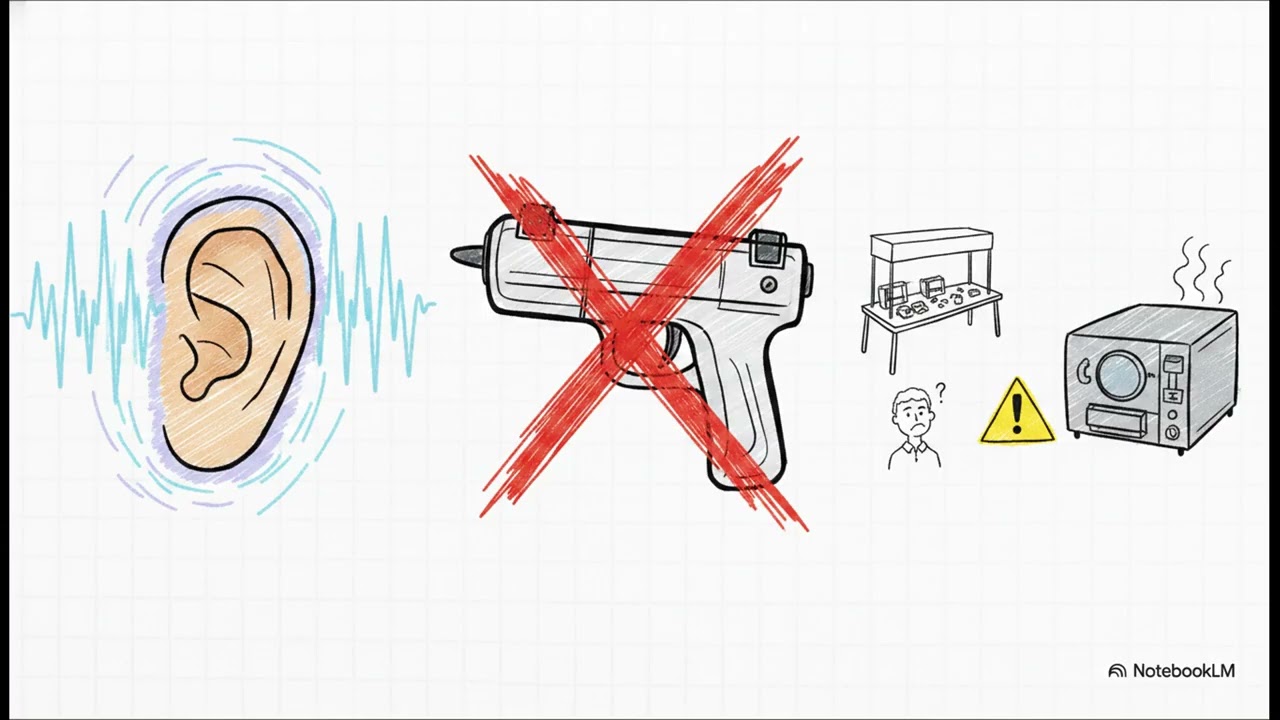
The viral angle is not the needle trend. It’s contamination, regulation, and what studios can prove.
Key Takeaways:
» The biggest tattoo and piercing story in the last 14 days is not a celebrity reveal or a new aesthetic; it is the recurring, high-engagement risk story around infection, ink contamination, and non-sterile practice.
» The science is blunt: sealed ink can still be contaminated, and dilution with non-sterile water is a known route of harm.
» Donation rules differ by country, but regulators consistently treat recent tattoos and piercings as a timing and sterility issue, not a style issue.
» Artists who cannot document ink lot numbers, sterile consumables, and aftercare are exposed the moment a client develops a reaction.
» The practical edge is simple: the studio that controls materials, traceability, and technique controls the risk.
1. Why infection-risk content keeps going viral
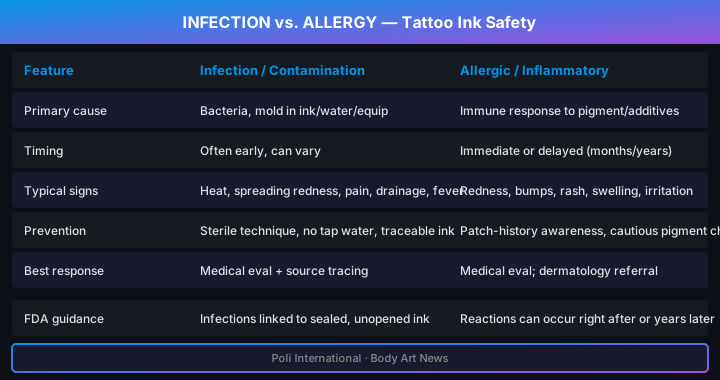
The most-discussed body-art stories rarely come from the trade magazines first; they explode when a client posts a bad reaction, a swollen piercing, or a tattoo that refuses to heal. That is the pattern regulators keep returning to, because the underlying problem is not drama, it is microbial contamination and material handling. The FDA states plainly that infections have been reported from contaminated tattoo inks, and that even unopened, sealed ink can harbor bacteria and other microorganisms.That matters because a lot of online discussion still frames these incidents as “bad luck” or “sensitive skin.” That is sloppy thinking. The FDA explicitly calls out non-sterile water used to dilute pigments as a common culprit, and warns that DIY tattoo inks and kits have been associated with infection and allergic reactions. In other words: the story is not whether tattoos are “safe” in the abstract. The story is whether the studio can prove its process was sterile, repeatable, and documented.
This is also why the blood-donation angle keeps surfacing in mainstream discussion. The American Red Cross and Australian Lifeblood both treat tattoos and piercings as a timing-and-sterility question: if the procedure was done in a regulated setting with sterile, single-use tools, eligibility can be immediate or near-immediate depending on the country and donation type; if not, wait periods apply. That policy logic is the same logic clients should use when choosing a shop: regulation and single-use technique are not paperwork theater. They are the line between a routine procedure and a preventable infection.
2. What the rules actually say, and why artists should care
If you want the short version, the authorities are not arguing about trends, they are arguing about contamination control. The FDA warns that reactions can appear immediately or years later, and that people should ask for the brand, color, and lot or batch number of the ink or diluent if a problem develops. The Red Cross says tattoos are acceptable in many cases if applied by a state-regulated entity using sterile needles and non-reused ink, while piercings are acceptable when single-use disposable equipment is used; otherwise, waiting periods apply. Lifeblood is even more explicit about licensing and single-use equipment as the dividing line for donation eligibility.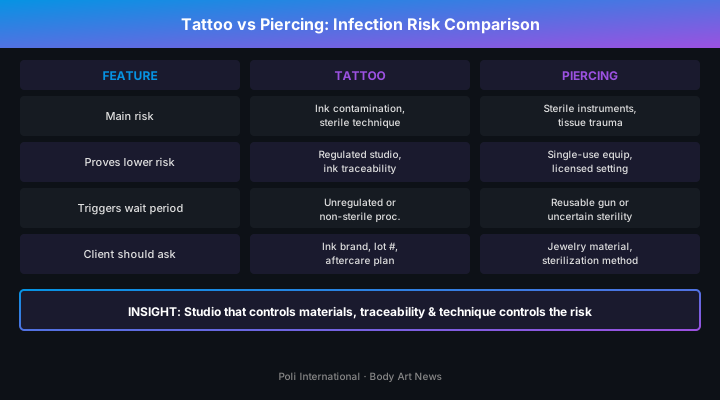
| Feature | Tattoo | Piercing |
|---|
| --- | --- | --- |
|---|---|---|
| Main risk regulator cares about | Ink contamination, sterile technique, allergic reaction | Sterile instruments, disposable jewelry or cassettes, tissue trauma |
| What proves lower risk | Regulated studio, sterile needles, ink traceability, no non-sterile dilution | Single-use equipment, licensed setting, documented hygiene |
| What triggers waiting periods in donation rules | Unregulated or non-sterile procedure | Reusable gun or uncertain instrument sterility |
| What clients should ask for | Ink brand, lot number, aftercare plan | Jewelry material, tool type, sterilization method, aftercare plan |
| What online virality usually obscures | A contamination or allergy issue gets mislabeled as “tattoo regret” | A mechanical or hygiene issue gets mislabeled as “piercing just being a piercing” |
The engineering truth is that body art is a controlled wound with foreign material introduced into tissue. That means the outcome depends on process control, not vibes. A polished Instagram reel says nothing about whether the studio used sterile water, tracked batches, or discarded contaminated materials. The FDA’s warning that there is “no surefire way” to tell if ink is safe without testing should end the fantasy that a sealed bottle is automatically clean.
This is where the practical side gets sharp for working artists. If you cannot answer three questions instantly, what ink was used, what lot it came from, and how the fluid was handled, you are underprepared for a complication conversation. That is not just medical prudence; it is reputational survival. It is also exactly why the science of tattoo ink contamination and healed-skin reactions matters more than whatever graphic trend is trending for 24 hours.
3. Technical deep dive: the numbers behind the risk
The useful numbers in this story are not aesthetic metrics; they are sterility markers and waiting periods. The FDA notes that contamination can happen even in sealed ink and that non-sterile water dilution is a common route of exposure. The Red Cross uses a three-month deferral in cases where tattoos or piercings were done outside regulated conditions or with reusable equipment. Lifeblood uses different intervals depending on the procedure: for Australia, tattooed clients can donate plasma straight away if the tattoo was done in a licensed parlour, but blood and platelets require a one-week wait; unlicensed tattoos trigger a four-month wait.Those differences do not mean the systems disagree on the science. They mean each blood service has chosen its own operational risk threshold. But the common thread is unmistakable: the system is designed around the idea that recent body art can carry a transient infection risk unless the procedure was demonstrably sterile.
For studios, the practical implications are straightforward:
- Use single-use needles and disposable consumables wherever possible.
- Never dilute pigments with anything that is not validated as sterile for that use.
- Record the brand, color, and batch/lot number for every ink used.
- Keep aftercare instructions written, not verbal.
- Treat unexplained redness, bumps, fever, or non-healing tissue as a referral event, not a “wait and see” moment.
And for piercing studios, the material conversation matters just as much as the tool conversation. The internet loves arguing about style, but the real clinical divide is still material quality, sterility, and correct insertion technique. That is why the relationship between piercing jewelry material choice and tissue irritation keeps showing up in professional practice discussions.
4. Patrick's Note: What I keep seeing in the field
What I’ve seen in studios for decades is simple: the bad outcomes almost never start with the art, they start with a shortcut. Someone reuses a step they should have discarded, dilutes a product they shouldn’t have touched, or assumes “factory sealed” means sterile enough. That assumption costs people skin, reputation, and sometimes the whole weekend.The part the internet misses is that most of these problems are boring until they aren’t. A clean tray setup, traceable ink, proper single-use workflow, and disciplined aftercare don’t make for viral content. But they do make for uneventful healing, which is the real win. My internal standard on this has never changed: if I cannot defend the material path from bottle to body, it doesn’t belong in the room.
5. FAQ: Technical Q&A
Q: Can a sealed tattoo ink bottle still cause an infection? Yes. The FDA says contaminated ink can be found even in unopened, sealed containers. That means sterility cannot be assumed from packaging alone; the handling, dilution, and storage chain matters.Q: Is a swollen piercing always an infection?
No. Swelling can come from mechanical trauma, pressure, or metal irritation, not only infection. The difference is that infection usually worsens, stays hot or painful, and may include discharge or fever, while irritation often tracks with jewelry fit, movement, or poor material choice.
Q: What should a client ask before getting tattooed or pierced?
Ask what sterile consumables are used, whether the studio is licensed or regulated, and what product lot numbers can be documented if there is a reaction. If the shop cannot answer cleanly, that is already your answer.
Conclusion: Control the wound, control the outcome
The most important body-art story right now is not that people are getting tattoos and piercings; it is that the public is still rediscovering how much materials science and hygiene decide the outcome. The FDA’s warnings, plus the donation rules from Red Cross and Lifeblood, all point in the same direction: sterile process is not optional, and traceability is not a luxury.If you are an artist, the takeaway is brutal and useful: your real product is not the design, it is the healed result. If you are a client, ask better questions before the needle starts.