
Lidocaine, Vasoconstriction and the Safe Limits of Numbing Cream

A complete technical reference for body art professionals on the pharmacology of topical anesthetics used in tattooing and piercing, covering local anaesthetic mechanisms (sodium channel blockade), dermal absorption and systemic toxicity risks (LAST), vasoconstriction effects on healing and ink dispersal, safe application limits, and the varying legal status of numbing creams across the EU, USA, and ASEAN jurisdictions.
⚡ Quick Reference
Critical Numbers
- Maximum Safe Lidocaine Dose, Topical5 mg/kg (non-mucosal, intact skin); approximately 300 mg for a 60 kg adult
- Maximum Safe Prilocaine Dose, Topical6 mg/kg; approximately 360 mg for a 60 kg adult
- Lidocaine Plasma Toxicity Threshold>5 μg/mL (CNS symptoms), >10 μg/mL (cardiovascular collapse)
- EMLA (Lidocaine 2.5% / Prilocaine 2.5%)Onset 60-90 minutes under occlusion, duration ~2 hours after removal
- Lidocaine/Tetracaine 7%/7% PeelOnset 30 minutes, duration ~60 minutes, higher potency but faster systemic absorption
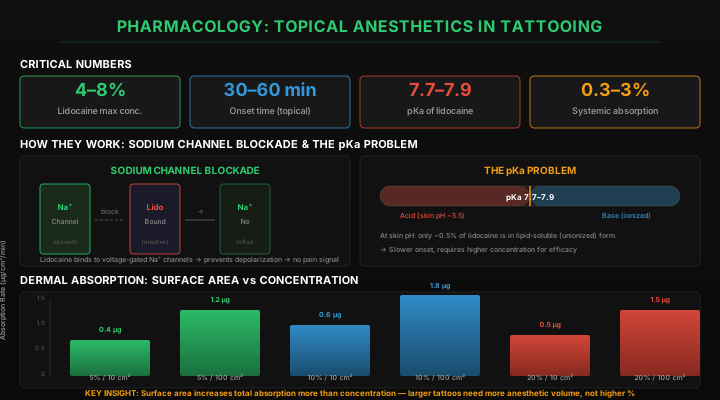
- Lidocaine pKa7.9 (means ~25% is uncharged and membrane-permeable at physiological pH 7.4)
- Dermal Absorption RateHighly variable, 3-45% of applied dose reaches systemic circulation depending on skin integrity, site vascularity, and occlusion
- Methemoglobinemia Risk (Prilocaine)o-toluidine metabolite oxidises haemoglobin, risk threshold >600 mg total dose, treatment: methylene blue 1-2 mg/kg IV
- Vasoconstriction Onset (Epinephrine)5-10 minutes, peak at 20-30 minutes, duration 60-90 minutes at 1:100,000 concentration
- Skin Blood Flow Reduction (Epinephrine)Up to 80% at application site, reducing anaesthetic washout but also reducing oxygen delivery to healing tissue
These are the non-negotiable safety parameters for topical anaesthetic use in body art. Exceeding any of these values risks systemic toxicity, local tissue injury, or both.
Topical anaesthetics are among the most widely used, least understood, and most dangerously misapplied pharmaceutical products in body art. A client applies a numbing cream purchased online, the artist tattoos for three hours, and the cream wears off at 90 minutes with the client in more pain than if they had started without it. Worse, some clients apply excessive amounts to large body surface areas under occlusion (plastic wrap), unknowingly creating the conditions for systemic local anaesthetic toxicity, a medical emergency that begins with perioral numbness and metallic taste and can progress to seizures and cardiac arrest before the artist realises anything is wrong.
This pillar covers the pharmacology of how these drugs work at the molecular level (sodium channel blockade), how they move through skin and into systemic circulation (dermal absorption kinetics), the clinical ceiling at which they become toxic (LAST risk thresholds), the contradictory effect of vasoconstrictors on healing and ink retention, and the fragmented regulatory landscape that leaves many artists operating in a legal grey zone between client demand and unlicensed medical practice.
How They Work: Sodium Channel Blockade and the pKa Problem
All local anaesthetics in clinical use share a common mechanism: reversible blockade of voltage-gated sodium channels (Nav1.x) on the intracellular side of the neuronal membrane. The drug must first penetrate the axonal membrane in its uncharged (free base) form, then re-equilibrate to the charged (protonated) form inside the cell to bind the channel pore from the cytoplasmic side. This pH-dependent equilibrium is governed by the drug's pKa relative to the local tissue pH.
- »Lidocaine (pKa 7.9): At physiological pH 7.4, approximately 25% of lidocaine molecules are in the uncharged membrane-permeable form and 75% are protonated and trapped. In inflamed or infected tissue (pH 5.5-6.5), less than 1% is uncharged, rendering lidocaine nearly inactive. This is why anaesthetising inflamed tissue is clinically difficult, the drug cannot cross the membrane.
- »Prilocaine (pKa 7.9): Similar pH behaviour to lidocaine. The distinguishing feature is prilocaine's o-toluidine metabolite, which accumulates with high doses (>600 mg) and oxidises haemoglobin from Fe²⁺ to Fe³⁺, producing methemoglobinemia. SpO₂ readings drop while PaO₂ (blood gas) remains normal, a diagnostic clue that the problem is haemoglobin dysfunction, not lung pathology.
- »Tetracaine (pKa 8.5): More potent than lidocaine (ester-type, not amide-type) with a higher pKa meaning less is uncharged at pH 7.4 (about 7%). The trade-off: slower onset but longer duration. Tetracaine is metabolised by plasma pseudocholinesterase, not hepatic CYP450, giving it a different toxicity profile from the amide local anaesthetics.
- »Eutectic Mixture (EMLA): The term "eutectic" describes a mixture of lidocaine and prilocaine in a specific ratio (1:1 by weight) where the melting point of the mixture is lower than either component alone. This allows both drugs to exist as a liquid oil at skin temperature (25°C) despite their individual melting points (lidocaine 68°C, prilocaine 37°C). The liquid-oil phase penetrates the stratum corneum far more effectively than crystalline solids. Without the eutectic principle, neither drug would reach meaningful dermal concentrations.
- »Lidocaine/Tetracaine 7%/7% Peel: A more recent formulation using a peelable film vehicle. The higher concentration (7% vs EMLA's 2.5%) delivers faster onset but increases systemic absorption risk proportionally. Clinical studies show comparable or superior pain reduction to EMLA for laser procedures, but the higher concentration demands stricter surface-area limits.
Dermal Absorption: Why Surface Area Matters More Than Concentration
The systemic absorption of a topical anaesthetic is governed by Fick's Law: flux = permeability coefficient × concentration gradient × surface area / barrier thickness. The skin barrier, the stratum corneum, is the rate-limiting step. Once a drug penetrates the stratum corneum, absorption into the dermal capillary plexus is rapid and near-complete. The single most dangerous variable the artist controls is not the concentration of the cream but the total surface area to which it is applied.
- »Surface Area Rule: Doubling the application area doubles systemic absorption at the same concentration. Halving the concentration but doubling the area results in the same systemic dose. A full back piece (~1,500 cm²) covered in 2.5% lidocaine under occlusion delivers a systemic dose equivalent to multiple vials of injectable lidocaine.
- »Occlusion Amplification: Plastic wrap occlusion increases stratum corneum hydration from ~15% to >40% water content, reducing barrier resistance by 10-100× depending on site. A "numbing wrap" applied for 60 minutes can deliver 3-5× the systemic dose of an unoccluded application.
- »Site Variability: Absorption rates vary by anatomical site. Mucosal surfaces (lips, genital) absorb 10-30× faster than intact forearm skin. Face and scalp absorb 3-5× faster than trunk skin. Palms and soles absorb 0.1-0.5× the forearm rate. A "standard" dose that is safe on the forearm can be toxic on the lip or perineum.
- »Broken Skin Multiplier: Abraded, razor-burned, freshly shaved, or recently lasered skin has effectively zero stratum corneum barrier. Absorption is near-injection equivalent. Pre-procedure skin preparation (shaving, exfoliation) significantly increases anaesthetic absorption and should be accounted for in dose calculations.
- »Vascularity and Clearance: Highly vascularised sites (face, scalp, genitals) absorb more drug but also clear it faster into systemic circulation, meaning peak plasma concentration occurs sooner and higher. Less vascularised sites (trunk, extremities) have slower absorption but also slower clearance, prolonging the plasma half-life.
LAST: Local Anaesthetic Systemic Toxicity, the Ceiling Artists Must Know
Local anaesthetic systemic toxicity (LAST) is the clinical syndrome that results when plasma concentrations of local anaesthetic exceed the therapeutic range and begin affecting the central nervous system and myocardium. The progression follows a predictable sequence: perioral numbness and metallic taste (plasma ~5 μg/mL), tinnitus and visual disturbances, muscle twitching and confusion (~7-8 μg/mL), generalised tonic-clonic seizures (~10 μg/mL), and finally cardiovascular collapse with bradycardia, hypotension, and asystole (>15 μg/mL). In the body art setting, LAST is entirely preventable if the artist understands the dose-surface-area relationship before applying the cream.
- »CNS Toxicity (Early): GABA-ergic inhibitory interneurons are more sensitive to local anaesthetic blockade than excitatory glutamatergic neurons. The initial effect is disinhibition, producing the classic prodrome of perioral numbness, metallic taste, lightheadedness, and tinnitus. These are WARNING SIGNS. If the client reports any of these during a session, remove the anaesthetic and monitor. Do not add more cream.
- »CNS Toxicity (Late): As plasma concentration rises, widespread cortical depression produces seizures, followed by coma and respiratory arrest. Seizure activity increases metabolic oxygen demand and produces lactic acidosis, which further destabilises cardiac conduction.
- »Cardiac Toxicity: Local anaesthetics block cardiac sodium channels (Nav1.5) with slower binding kinetics than neuronal channels, but the blockade accumulates and is use-dependent. The result: prolonged PR interval, widened QRS complex, progressive bradycardia, and eventually asystole or pulseless electrical activity. Bupivacaine (rare in topical preparations) has the highest cardiotoxicity due to very slow dissociation from cardiac sodium channels. Lidocaine is less cardiotoxic but not zero-risk.
- »Lipid Rescue Therapy: Intravenous lipid emulsion (Intralipid 20%, 1.5 mL/kg bolus followed by 0.25 mL/kg/min infusion) is the specific antidote for LAST. It works by creating an expanded plasma lipid phase that sequesters lipophilic local anaesthetic molecules, reducing free plasma concentration. The artist does not administer this, but knowing it exists means calling emergency services immediately with the specific diagnosis ("suspected lidocaine toxicity") rather than a generic "client is unwell".
- »Methemoglobinemia (Prilocaine Specific): Unlike lidocaine toxicity which is dose-dependent and predictable, methemoglobinemia from prilocaine's o-toluidine metabolite is idiosyncratic and can occur at standard doses in susceptible individuals. Presentation: cyanosis with normal PaO₂, chocolate-brown blood, SpO₂ reading stuck at ~85% regardless of oxygen delivery. Specific treatment: methylene blue 1-2 mg/kg IV. Activated charcoal is not effective for already-absorbed drug.
Vasoconstriction: The Double-Edged Sword of Epinephrine
Many topical anaesthetic formulations include epinephrine (adrenaline) at concentrations of 1:100,000 (10 μg/mL) or 1:200,000 (5 μg/mL) as a vasoconstrictor. The rationale is sound: by constricting local capillaries, epinephrine reduces the rate at which the anaesthetic is washed out of the dermis, prolonging its effect and reducing systemic absorption. But vasoconstriction also reduces local tissue perfusion, and in the context of tattooing, this creates a conflict with the wound-healing process that depends on adequate blood flow.
- »Prolonged Anaesthesia: Epinephrine at 1:100,000 extends lidocaine duration from ~60 minutes to 120-180 minutes by reducing dermal clearance. For long tattoo sessions, this is mechanically advantageous but pharmacologically cumulative: the same 300 mg lidocaine dose now has a longer window to absorb through hypoperfused skin.
- »Ischaemic Risk: Vasoconstriction reduces tissue oxygen tension. In a freshly tattooed wound, the tissue oxygen demand is elevated (inflammation, cellular recruitment, debris clearance). Reducing perfusion during this critical window can theoretically delay healing, increase the risk of localised tissue necrosis in areas with already marginal blood supply (distal extremities, previously scarred skin, areas with subcutaneous fillers), and compromise the fibroblast function essential for pigment encapsulation.
- »Ink Dispersal Interference: The initial hours after tattooing are when macrophage recruitment and ink particle phagocytosis begin. Adequate perfusion delivers monocytes to the dermal pigment depot. Vasoconstriction during and immediately after the procedure may reduce the number of macrophages reaching the ink, potentially altering the pattern of pigment retention and contributing to uneven healing or premature fading.
- »Systemic Epinephrine Absorption: While the primary concern with topical anaesthetics is lidocaine toxicity, epinephrine is not benign at systemic doses. Absorption through large surface areas or broken skin can produce tachycardia, hypertension, anxiety, and tremors. Case reports document systemic epinephrine toxicity from topical anaesthetic gels applied to mucosal surfaces (Cureus 2023, Clin Med Insights 2026), where absorption is 10-30× higher than intact skin.
- »Epinephrine-Free Alternatives: For clients with cardiovascular conditions, hypertension, or anxiety disorders, epinephrine-free formulations (plain lidocaine, lidocaine/prilocaine without vasoconstrictor) are the safer choice. The trade-off is shorter duration and higher systemic absorption of the anaesthetic itself, requiring stricter surface-area limits.
Safe Topical Anaesthetic Application Protocol
These steps convert the pharmacology into a repeatable, documented procedure that protects both the client and the studio. Every application should follow this sequence without exception.
- 1Pre-screening: Ask the client about known allergies to local anaesthetics (amide or ester types), current medications (beta-blockers, cimetidine, fluoxetine all reduce lidocaine clearance), cardiovascular conditions, pregnancy, and G6PD deficiency (methemoglobinemia risk with prilocaine).
- 2Calculate the maximum safe dose: Body weight (kg) × 5 mg/kg (lidocaine) or 6 mg/kg (prilocaine). For a combination product like EMLA, use the lower cap. Record this number in the client record.
- 3Measure the treatment area: Estimate area in cm² (hand-sized area ≈ 150 cm²). Do not exceed 300 cm² for lidocaine 2.5% or 200 cm² for lidocaine/tetracaine 7% in a single application.
- 4Check skin integrity: Do not apply to broken, abraded, razor-burned, or recently lasered skin absent explicit clinical rationale. Absorption through compromised barrier is near-injection equivalent.
- 5Apply the minimum effective amount: For EMLA, 1.5-2.0 g per 10 cm² is the clinical standard. More cream does not mean more anaesthesia, it means more systemic absorption. Spread evenly, do not massage in.
- 6Occlude only if needed: If using occlusion (plastic wrap), document the start time and set a timer for exactly the manufacturer-recommended duration (typically 60-90 minutes). Do not exceed this. Do not occlude large areas (>200 cm²).
- 7Remove thoroughly: At the timer, remove all residual cream with a dry wipe, then wash the area with mild soap and water. Residual cream continues absorbing after removal unless washed off.
- 8Ask the toxicity screening questions: Before starting the procedure, ask: "Do you feel any numbness or tingling around your mouth? Any metallic taste? Any ringing in your ears?" A "yes" to any of these is a STOP signal. Do not proceed.
- 9Monitor during the procedure: Check in with the client every 30 minutes using the same three questions. Epinephrine-containing creams produce cardiac effects (palpitations, anxiety) that clients may attribute to "needle anxiety" but are pharmacological.
- 10Document everything: Product name, batch number, concentration, amount applied (g), surface area (cm²), occlusion time, client responses to screening questions, and any adverse effects. This record is the studio's legal defence if a reaction occurs.
- 11Post-procedure: Advise the client not to apply additional anaesthetic cream at home ("the session was long, I'll put more on to sleep") without consultation. Re-application within 12 hours compounds systemic dose.
- 12Emergency preparedness: Know the signs of LAST (perioral numbness, metallic taste, tinnitus → seizures → cardiac arrest). Have the local emergency number accessible. Inform emergency services of the specific drug (lidocaine, prilocaine, tetracaine), estimated dose, and time of application.
Common Errors and Failure Modes
These are the most frequent mistakes in topical anaesthetic use in body art, and the clinical consequences of each.
- ✕Dosing by intuition instead of calculation: "Two tubes should be fine" is not a dose calculation. A 50 kg client receiving two 30 g tubes of EMLA (2.5% lidocaine = 750 mg per tube, total 1,500 mg) receives 30 mg/kg of lidocaine, six times the 5 mg/kg maximum. This is the single most common mechanism of LAST in body art settings.
- ✕Applying cream then immediately starting: Topical anaesthetics require 30-90 minutes for meaningful dermal penetration depending on formulation. Starting immediately means tattooing through unanaesthetised skin. The client experiences full pain, the cream is wasted, and residual drug continues absorbing throughout the session.
- ✕Using unknown or unregulated products: Creams purchased online from unregulated sources may contain undisclosed concentrations, undeclared active ingredients (benzocaine, tetracaine at unknown %), or microbial contamination. A product labelled "5% lidocaine" from an unlicensed manufacturer is an unknown-risk exposure.
- ✕Occluding large areas for long sessions: A full back occluded for 120 minutes under plastic wrap creates near-maximum absorption conditions. The systemic dose from 1,500 cm² under occlusion can exceed the threshold for LAST even when the per-unit-area dose is "standard". The product label assumes small-area clinical use (10-50 cm²), not full-torso tattooing.
- ✕Reapplication during a long session without dose tracking: A client whose EMLA wore off at 90 minutes into a 6-hour session receives a second application at hour 2. By hour 6, the cumulative dose is additive, not independent. The washout half-life of lidocaine (~90 minutes) means plasma concentration builds across reapplication episodes.
- ✕Ignoring drug interactions: Fluoxetine and paroxetine (SSRIs) inhibit CYP3A4, reducing lidocaine clearance. Cimetidine reduces hepatic blood flow and inhibits CYP450, increasing lidocaine plasma levels by 20-50%. Beta-blockers reduce cardiac output, decreasing lidocaine distribution and increasing peak plasma concentration. A standard dose in a client on these medications is not a standard risk.
- ✕Applying cream to mucosal surfaces: Lip, oral, genital, and anal mucosa absorb topical anaesthetics 10-30× faster than skin. A dose calculated for forearm skin applied to the lip delivers a systemic bolus equivalent to 10× the intended dose. Mucosal application requires separate, lower dosing guidelines and is inherently higher risk.
- ✕Pregnancy and lactation assumptions: Lidocaine crosses the placenta and is excreted in breast milk. While categorised as FDA Pregnancy Category B (no demonstrated risk in animal studies), the combination of pregnancy-related increased cardiac output (faster systemic absorption) and altered plasma protein binding (lower albumin = higher free drug fraction) changes the pharmacokinetic profile. Prilocaine carries additional methemoglobinemia risk to the foetus, whose fetal haemoglobin is more susceptible to oxidation.
Regulatory Framework by Jurisdiction
Topical anaesthetics exist at the intersection of pharmaceutical regulation and cosmetic practice, creating a legal grey zone in many jurisdictions. Some classify numbing creams as prescription-only medicines, others as over-the-counter products with concentration limits, and some lack specific regulation entirely. The professional standard should follow the most conservative interpretation: if the product alters physiology (sodium channel blockade, vasoconstriction), it is a drug, and its use in a commercial body art setting requires a documented risk assessment regardless of local legal classification.
- EMA Classification: Lidocaine and prilocaine at concentrations above 5% are prescription-only medicines (POM). EMLA (2.5%/2.5%) is pharmacy-only (P) in the UK, sold after pharmacist consultation.
- Cosmetics Regulation (EC) 1223/2009: Products making anaesthetic claims are not cosmetics and fall under medicinal product regulation.
- MHRA (UK): Topical anaesthetics used for non-medical purposes (tattooing) are in a regulatory grey area. The MHRA guidance treats any product with a pharmacological effect as a medicine regardless of marketing classification.
- Product licensing: EMLA cream holds a Marketing Authorisation (MA) as a medicinal product. Unlicensed imports or compounded preparations used in studios violate medicines legislation.
- Professional indemnity: UK studio insurers increasingly exclude topical anaesthetic use from coverage unless the product is pharmacy-supplied and applied per manufacturer instructions.
- Ireland HPRA: Similar framework to MHRA. Topical anaesthetics for tattooing not explicitly regulated but medicinal product law applies.
- FDA OTC Monograph: Lidocaine up to 4% and benzocaine up to 20% are permitted in OTC topical anaesthetic products. Concentrations above this are prescription-only or unapproved drugs.
- FDA Drug Safety Communication (topical anaesthetics): Warns against application to large areas, use under occlusion without supervision, and application to broken or irritated skin due to risk of systemic toxicity.
- Compounded preparations: Many "numbing creams" marketed to tattoo studios are compounded products not subject to FDA pre-market approval. Their concentration, sterility, and ingredient accuracy are unverified.
- State-level restrictions: Oregon Health Licensing Office restricts topical anaesthetic use in tattoo facilities. Several other states (California, Texas, New York) have board rules limiting or prohibiting certain topical anaesthetic applications in body art settings.
- DEA scheduling: Lidocaine, prilocaine, and tetracaine are not controlled substances. Epinephrine is not scheduled. This creates a permissive distribution environment that contrasts with the pharmacological risk.
- Liability: US malpractice cases involving topical anaesthetic toxicity in cosmetic settings have resulted in significant settlements. Studios are advised to maintain product sourcing records and application documentation as legal protection.
- Thailand FDA (อย.): Topical anaesthetics classified as dangerous drugs requiring pharmacy dispensing. Lidocaine above 2% requires prescription. Tattoo studios using numbing creams without medical supervision operate in an unregulated enforcement gap.
- Singapore HSA: Lidocaine preparations are prescription-only medicines. Import, sale, and use without a licence is an offence under the Medicines Act. Studio use of imported numbing creams is technically illegal.
- Malaysia NPRA: Topical anaesthetics registered as Group C poisons requiring pharmacy sale. Enforcement in tattoo settings is minimal but the legal framework exists.
- Australia TGA: Lidocaine up to 5% is Schedule 2 (Pharmacy Medicine, behind-counter sale with pharmacist advice). Above 5% is Schedule 4 (Prescription Only). EMLA is Schedule 2 when pharmacy-supplied.
- New Zealand Medsafe: Similar scheduling to Australia. Lidocaine 2.5% in combination products is pharmacy-only. Studio use without pharmacist supply documentation is a compliance risk.
- Regional practice: In Thailand, Vietnam, and Indonesia, unregulated numbing creams are widely available in tattoo supply channels. The absence of enforcement does not eliminate the pharmacological risk, the drug does not know it is unregulated.
Patrick's Note
"I have seen the same numbing cream tube in studios across Bangkok, London, and Los Angeles, and the conversation is always the same: the artist trusts it because it says '5% lidocaine' on the label. The percentage on the tube tells you nothing about the dose your client is receiving. The dose is concentration × amount × surface area, and the surface area is the variable no one calculates. When I designed the [Medication Interaction Checker](/medication-interaction-checker/), it was specifically to catch the drug-drug interactions (SSRIs, beta-blockers, cimetidine) that turn a standard topical dose into an unpredictable plasma level. My rule for our own studio: if the client needs more than 10 g of any numbing product for a single session, we split the session across two days. Pain management in body art should be about client comfort, not pharmacological brinkmanship."
Founder & Piercing Expert
Poli International
Technical Specifications
| Parameter | Standard / Value |
|---|---|
| Maximum Lidocaine Dose, Topical | 5 mg/kg (intact skin); ~300 mg for 60 kg adult |
| Maximum Prilocaine Dose, Topical | 6 mg/kg; ~360 mg for 60 kg adult |
| Lidocaine Plasma Toxicity (CNS) | >5 μg/mL (perioral numbness, metallic taste, tinnitus) |
| Lidocaine Plasma Toxicity (Cardiac) | >10-15 μg/mL (arrhythmia, cardiovascular collapse) |
| Lidocaine pKa | 7.9 (~25% uncharged at pH 7.4) |
| EMLA Onset | 60-90 minutes under occlusion |
| EMLA Duration | ~2 hours after removal |
| Lidocaine/Tetracaine 7%/7% Onset | 30 minutes (peel formulation) |
| Dermal Absorption Rate Range | 3-45% of applied dose, site and barrier dependent |
| Mucosal Absorption Multiplier | 10-30× compared to intact forearm skin |
| Methemoglobinemia Risk (Prilocaine) | o-toluidine metabolite, threshold >600 mg total dose |
| Lipid Rescue Therapy | Intralipid 20%, 1.5 mL/kg bolus then 0.25 mL/kg/min infusion |
| Lidocaine Elimination Half-Life | ~90 minutes (hepatic CYP3A4/CYP1A2) |
| Epinephrine Vasoconstriction Onset | 5-10 minutes, peak at 20-30 minutes, duration 60-90 min |
| FDA OTC Lidocaine Limit | 4% (above this is prescription or unapproved) |
References
- [1]FDA Drug Safety and Availability (topical anaesthetics safety communications)https://www.fda.gov/drugs/drug-safety-and-availability
- [2]Oregon Health Authority, Tattoo Facility Licensinghttps://www.oregon.gov/oha/PH/HEALTHYENVIRONMENTS/Pages/index.aspx
- [3]American Society of Anesthesiologists (ASA), Standards and Practice Parametershttps://www.asahq.org/standards-and-practice-parameters
- [4]Seth D et al., Epinephrine-Containing Topical Anesthetic Gel Inducing Systemic Epinephrine Toxicity (Cureus, 2023)https://pubmed.ncbi.nlm.nih.gov/37809235/
- [5]Mordhorst A et al., Systemic Epinephrine Toxicity Following Topical Anesthetic Gel on Mucosal Surfaces (Clin Med Insights Case Rep, 2026)https://pubmed.ncbi.nlm.nih.gov/42051598/
- [6]Matin T et al., Comparison of lidocaine/tetracaine cream and lidocaine/prilocaine cream for local anaesthesia during tattoo removal (Br J Dermatol, 2017)https://pubmed.ncbi.nlm.nih.gov/27377616/
- [7]Tanghetti E et al., Pain management with a topical lidocaine and tetracaine 7%/7% cream with laser dermatologic procedures (J Drugs Dermatol, 2013)https://pubmed.ncbi.nlm.nih.gov/24002144/
- [8]Tan VY et al., Evaluation of EMLA cream for preventing pain during tattooing of rabbits (PLoS One, 2012)https://pubmed.ncbi.nlm.nih.gov/22970216/
- [9]Alster TS, Evaluation of the S-Caine Peel for induction of local anesthesia for laser-assisted tattoo removal (Dermatol Surg, 2005)https://pubmed.ncbi.nlm.nih.gov/15841627/
- [10]Holmes AM et al., Assessment of Drug Delivery Kinetics to Epidermal Targets In Vivo (AAPS J, 2021)https://pubmed.ncbi.nlm.nih.gov/33782803/
- [11]Singh P et al., Effect of perfusion flow rate on the tissue uptake of solutes after dermal application (J Pharm Pharmacol, 1994)https://pubmed.ncbi.nlm.nih.gov/7699574/
- [12]Singh P et al., Effects of vasoconstriction on dermal pharmacokinetics and local tissue distribution of compounds (J Pharm Sci, 1994)https://pubmed.ncbi.nlm.nih.gov/9120806/
- [13]Becker DE et al., Local Anesthetics: Review of Pharmacological Considerations (Anesth Prog, 2012)https://pubmed.ncbi.nlm.nih.gov/22822998/
- [14]Neal JM et al., ASRA Practice Advisory on Local Anesthetic Systemic Toxicity (Reg Anesth Pain Med, 2018)https://pubmed.ncbi.nlm.nih.gov/29561291/
- [15]European Medicines Agency, EMLA (lidocaine/prilocaine) Summary of Product Characteristicshttps://www.ema.europa.eu/en/medicines/human/EPAR/emla
Put Science Into Practice
This technical standard is the architectural foundation for our professional analytical tools.