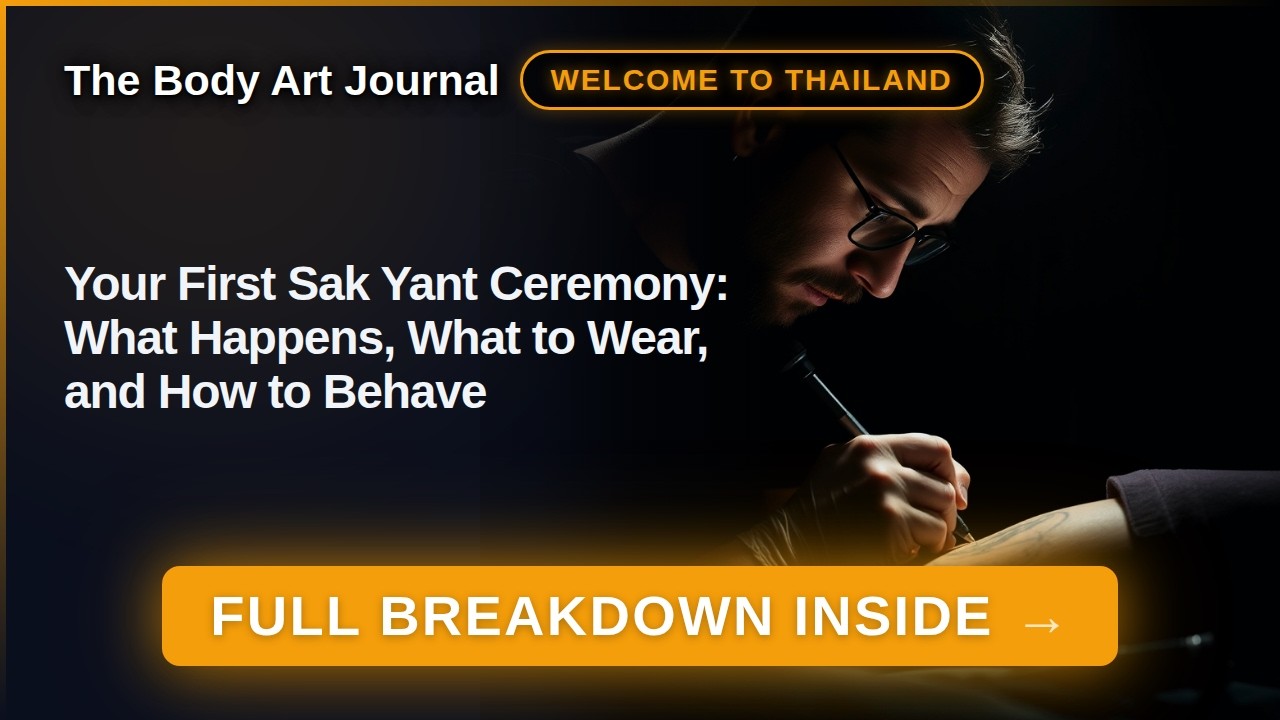
Treat Sak Yant as a ceremony with a tattoo in the middle—not a tattoo appointment with decoration around it
Key Takeaways:
» Yok khru is the opening offering and act of respect to the master, not a tip handed over after the blessing.
» Wear clean, modest clothing covering shoulders and knees, with practical access to the tattoo site.
» Bring the offering requested by the temple or master, plus identification, water, and any relevant medical information.
» During tattooing, sit still, keep your feet tucked away from people and shrines, and do not film without permission.
» The final chant and personal blessing belong to the ritual relationship; receive them quietly rather than treating them as a photo opportunity.
1. The Ceremony Starts Before the Needle
A first Sak Yant appointment can look deceptively simple from the outside: arrive, sit down, receive a hand-poked tattoo, leave with an impressive photograph. That description misses the point. Sak Yant—สักยันต์, meaning sacred yantra tattooing—is a living religious practice in which the tattoo, the master’s authority, spoken formulas, offerings, and the recipient’s conduct belong to one ritual system.
Ethnographic work on the Wat Bang Phra tradition describes the knowledge of the design and the katha, or ritual chant, as part of the master-to-recipient relationship rather than as optional theatre. National Geographic likewise notes that many people can reproduce the visible tattoo, but far fewer know the chants associated with its blessing. The BBC has described devotees seeking Sak Yant as a spiritual anchor, often connected in their understanding with protection or good fortune—beliefs held by practitioners, not effects that science can verify. Academic discussion of Sak Yant ritual and Buddhist context National Geographic’s account of Sak Yant masters and mantras BBC coverage of sacred tattoos in Thailand
That is why the first practical rule is simple: do not arrive treating the ceremony as a menu of designs. Some masters choose the yant, placement, or sequence according to your situation, lineage, and their judgment. You may explain your intention, but the relationship is not the same as ordering a flash tattoo and asking for extra shading.
2. What Happens, and What You Actually Need
The details vary between temples, private samnak—สำนัก, a master’s place of practice—and studios working with traditional practitioners. There is no single universal script. Still, a first-timer usually encounters the following sequence:
| Stage | What usually happens | What you should do |
|---|---|---|
| Arrival | Shoes come off and you wait for direction | Observe quietly and silence your phone |
| Yok khru | Flowers, incense, candles, and a monetary offering are presented | Use both hands, wai, and follow the master |
| Consultation | You discuss intention, placement, health, and conduct | Answer honestly and ask questions before starting |
| Tattooing | The master applies the design, often by hand | Sit still, breathe normally, and do not film |
| Activation chant | The master recites prayers or katha over the completed yant | Keep still and join your hands if instructed |
| Personal blessing | The master addresses you and the finished tattoo | Receive it respectfully and wait before photographing |
The offering is commonly called yok khru—ยกครู, “honouring or raising the teacher.” Depending on the place, it may include a prepared tray with flowers, incense, candles, and money. The amount and contents are not identical everywhere, so ask the temple, coordinator, or master in advance rather than improvising a supermarket basket at the gate. The important point is its meaning: it acknowledges the teacher and lineage before the work begins. A practical ceremony sequence including yok khru, chanting, and blessing
Bring a passport or identification if the venue requests it, water, and any medication you may need. Tell the master or coordinator about allergies, fainting history, diabetes, immune problems, pregnancy, blood-borne infections, or medication that affects bleeding. Religious seriousness does not cancel ordinary anatomy. Nor does a sacred setting make poor infection control acceptable; sterile single-use needles, clean working surfaces, hand hygiene, and safe disposal still matter.
3. How to Dress, Sit, and Behave
Wear clean, loose clothing that covers the shoulders and knees. Long trousers, a long skirt, or loose cotton clothing is practical. Choose garments that allow access to the tattoo site without requiring a theatrical striptease in a room full of strangers. Avoid transparent fabric, deep necklines, very short shorts, and anything so tight that it has to be dragged across freshly tattooed skin.
At a temple, remove your shoes where instructed. Sit on the floor or a mat if that is the local arrangement, but copy the people around you rather than assuming a yoga position designed for Instagram. Keep your feet tucked behind you and never point them toward a monk, master, shrine, or another person. If you need to move, ask or wait for a natural pause.
The wai—ไหว้, greeting with palms together—is used to show respect. Let the master establish the level and timing. You do not need to perform an elaborate gesture from memory; a sincere, correctly timed wai is better than an enthusiastic pantomime. Keep your voice low, put the phone away, and ask before taking photographs. The room is not a content studio merely because somebody brought a camera.
The same practical discipline applies to the tattoo itself. Eat sensibly beforehand, avoid arriving intoxicated, and do not take blood-thinning medication casually for the sake of comfort. If you are unwell, postpone. A ceremony is not improved by a fainting client, and nobody wins when the master has to work around avoidable bleeding.
4. Patrick's Note: The Quiet Part Is Part of It
The thing first-timers usually worry about is whether they will know what to do. You will not know everything, and that is normal. Watch the people around you, follow the master’s instructions, and do not confuse confidence with respect. The person who arrives in appropriate clothes, listens, and asks one clear question is already behaving better than the tourist who has memorised three words and wants to livestream the blessing.
The most misunderstood moment is often the chant. It is not a magic switch that turns ink on, and it is not a decorative sound added for atmosphere. Practitioners believe the recitation connects the tattoo with the master, lineage, and intended qualities of the yant. I respect that belief; I do not pretend that protection from bullets or supernatural luck has been demonstrated in a laboratory. For the practical side of traditional tattoo safety, the same rule applies as anywhere else: ritual respect and sound hygiene must sit in the same room. The relationship between Sak Yant tradition and hygienic tattoo practice in Thailand is not a choice between culture and safety.
5. FAQ: Technical Q&A
Q: What exactly should I bring for yok khru?
Ask the temple or master before travelling. A common offering includes flowers, incense, candles, and a monetary offering, but the required set differs by venue. Bring the requested items neatly arranged, and present them with both hands when directed.
Q: Can I choose my own Sak Yant design?
Sometimes you may discuss a preferred yant or intention, but many traditional masters retain authority over the design, placement, or wording. Do not assume that a catalogue image carries the same meaning across lineages. Ask what the master recommends and why before the needle starts.
Q: What happens during the activation chant?
After or during completion, the master may recite katha or prayers over the yant and then give a personal blessing. Sit still, keep your hands together if instructed, and listen; the ceremony is not the moment to interrupt for a close-up photograph.
Q: Should I tip the master after the blessing?
Do not invent a tipping ritual. The yok khru offering is normally presented near the beginning, while any later donation, fee, or assistant payment depends on the venue. Ask discreetly in advance so money does not become the loudest part of a quiet ceremony.
Conclusion: Arrive Prepared, Leave Respectfully
A first Sak Yant ceremony is easiest when you prepare for the whole encounter rather than only the tattoo. Wear modest clothing, bring the correct offering, disclose health information, follow the master’s lead, sit properly, and give the chant and blessing your full attention.
The tattoo may be the part that remains on your skin, but the ceremony is what gives the practice its living context. Your first Sak Yant ceremony: what happens, what to wear, and how to behave should be approached as a meeting with a lineage—not a themed appointment with incense.