
These pages started as internal reference documents at Poli International. When we needed to know the nickel-allergy prevalence in a specific demographic, or the exact REACH migration limit for a piercing post, we looked up the primary source and wrote it down. Over 25 years of manufacturing body jewellery, that reference file grew into a body of evidence that journalists, regulators and studios began asking for.
Each page below is a self-contained data reference with embedded charts you can cite or embed. All figures are linked to their primary source. No paywalls, no accounts, no data collection.
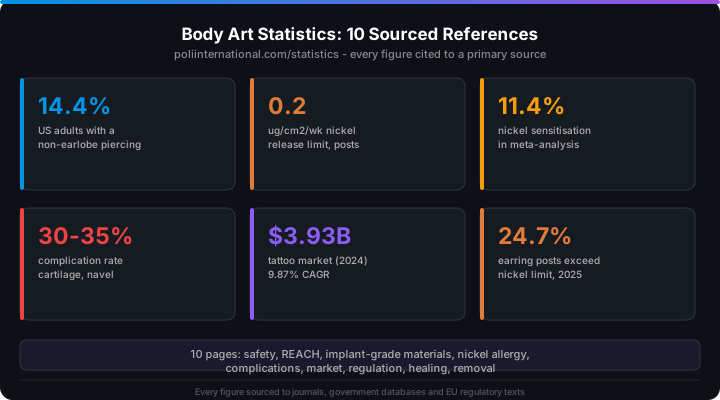
All Statistics References
Body Art Safety
Piercing prevalence, complication rates, nickel allergy, and implant-grade material standards in one sourced reference.
REACH Regulation
Nickel migration limits, tattoo ink restrictions, and SVHC rules that apply to body jewellery and studio products in the EU.
Implant-Grade Materials
ASTM F136 titanium, 316L steel, and polymer biocompatibility data: what "implant-grade" actually means for body jewellery.
Nickel Allergy
Prevalence by age and gender, the effect of the EU Nickel Directive, and why piercing is the primary route of nickel sensitisation.
Piercing Complications
Infection rates by site, cartilage vs soft-tissue risks, and oral jewellery complications sourced from clinical studies.
Industry & Market
Global market size, growth projections, studio economics, and consumer demographics for the tattoo and piercing industry.
Regulation Tracker
A timeline of regulatory changes affecting body jewellery, tattoo inks, and studio compliance across the EU and beyond.
Jewellery Materials
Nickel content by alloy, material biocompatibility data, and the clinical evidence linking jewellery materials to allergic contact dermatitis.
Healing Data
Healing timelines, complication rates by site, and evidence-based aftercare outcomes for tattoos and piercings.
Tattoo Removal
Laser sessions by Kirby-Desai score, colour clearance rates, and the clinical factors that determine how many sessions you will need.