
Body Art WeeklyStudio of the Week · Bangkok Ink · The founder
Martin's Thailand
Village temples, a boxer who felt no pain, and a headman who would not stop talking
Bangkok Ink, Sukhumvit 33, Bangkok, Thailand
The founder
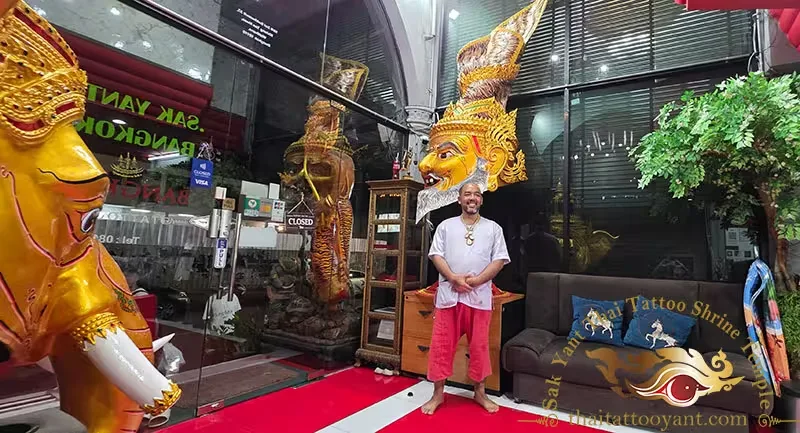
Long before Bangkok Ink, Martin Kendall lived in Thai villages, from the deep south to the North-East and the Cambodian border, and watched Sak Yant do its work in everyday life. He wrote it all down on his Sak Yant site. Here are his stories, in his own words, and the friend who made a needle with him.
The red cloth
Fifty kilometres south of Nakhon Si Thammarat
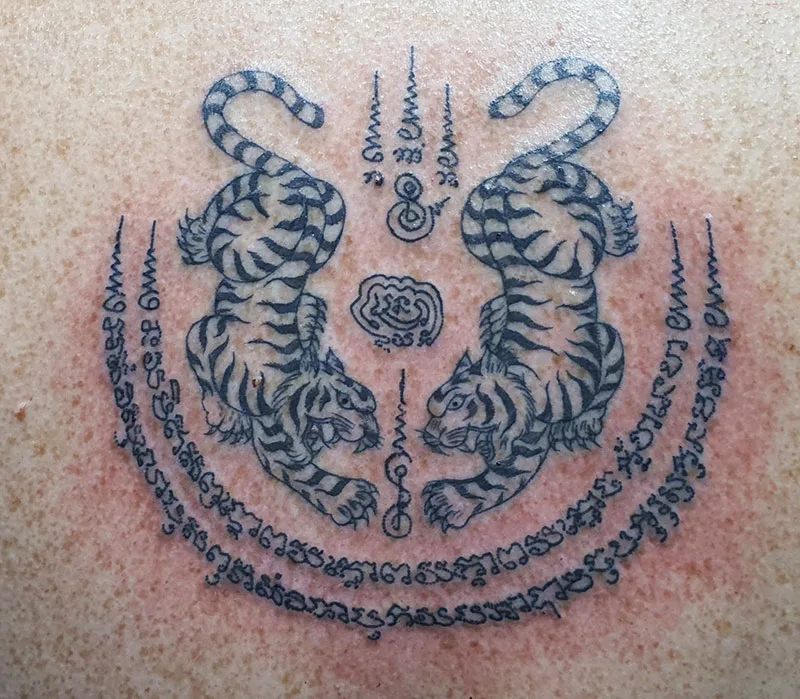
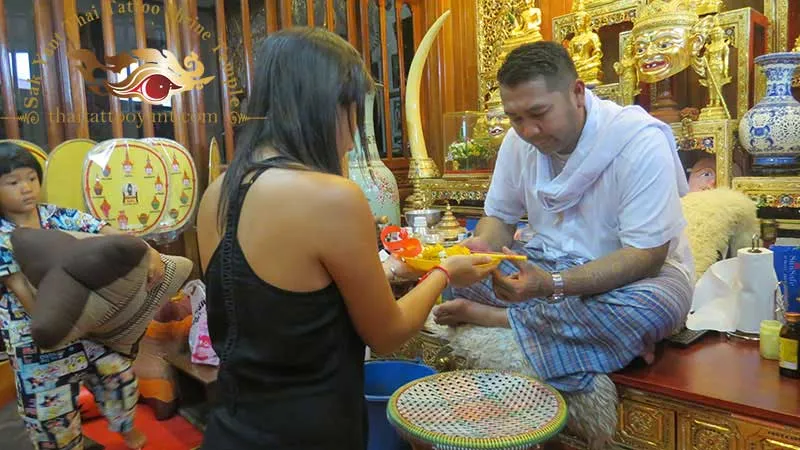
"Having lived in Thailand for many years, I have encountered Sak Yant tattoos on numerous occasions." The first one Martin tells is the best. In a small southern village, a man was explaining something urgently to his friends, and one of them came out of the house with "a small piece of red cloth tied with thin white string". Inside: "this weird geometrical shape with strange symbols around it."
"Suddenly an agreement of some kind was reached and we all set off in a convoy of motorcycles towards the local temple." The Yant was tattooed onto the man's back, with long chanting. Only later did Martin learn why: the man's wife had a secret lover, and the Yant was to ward off admirers. His verdict: "As far as I know, the man's wife didn't stray again so it must have worked."
“Sak Yant is alive and well and flourishing within Thai society.”
Muay Thai
The boxer who felt no pain
"Almost all the Thai boxers, especially in the South of Thailand, have Yant tattoos on their body for either protection or good luck." One old fighter was "literally covered in Sak Yant tattoos". He won easily, and another boxer explained that "this guy felt no pain and he wore down all his opponents because he had so many Yants on his body that he felt invincible!"
Then there was the old man with a neck full of amulets, each for a different protection. People teased him and asked him to take them off, just for a moment. He refused: "unless he took them off, he would live forever!"
The village doctor
When the Ruesi came once a week
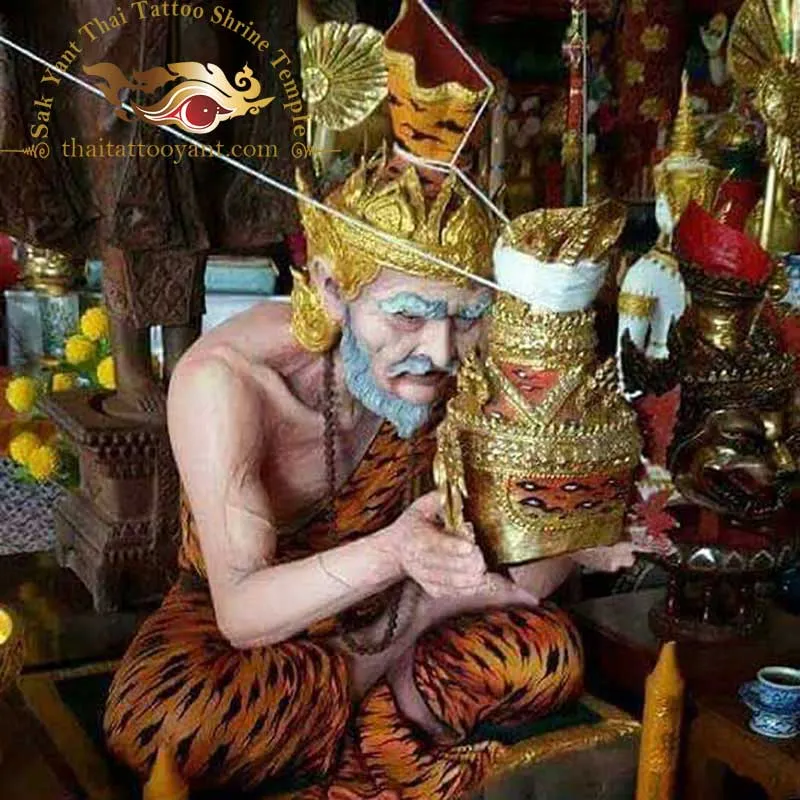
Martin befriended an elderly man in the same village and asked him how life used to be. "He told me that when he was a boy, the Ruesi would come to the village once a week and would attend sick people, handing out potions made from things in the forest and offer Yantras as protection against a multitude of things."
Martin's conclusion is the key to the whole tradition: "The Ruesi was indeed the equivalent of a modern-day physician and probably the only option the villagers had at that time." Healer first, tattooer second.
The best story
The headman and the speaker jack
"One particular incident amused me greatly." The village headman had a PA system for community news, liked a drink, and on bad nights would "rabble to the whole village at the highest volume imaginable". One evening Martin asked what the slurred voice blasting "across the jungle" was about: the headman was upset because his wife had spilled water on his bed.
An old woman spread a piece of cloth on a table and began to chant, to invoke a Yant that would stop him talking. "Much to everyone's amazement, the noise abruptly stopped." Then everyone burst out laughing: it was not the chant. "The wife had woken and crept round the back of the amplifier and pulled out the speaker jack!" Magic, Thai village style.
The border
Khmer script, and other lessons
Martin spent a few months near the Cambodian border and got to know Cambodian labourers. There, they told him, Sak Yant was "much more for the men", soldiers, officials and convicts, and the Yants use Khmer script, "much the same as Thailand does" in its own way.
He also picked up the manners every visitor should know. "Thai people will never walk under a washing line and generally regard the head as the most sacred part of the body, while the feet are considered dirty." Do not touch a Thai man's head. And "If you ever see a Thai banknote on the floor, NEVER put your foot on it": the King's head is on every note.
From villages to Sukhumvit
Earning the masters' trust
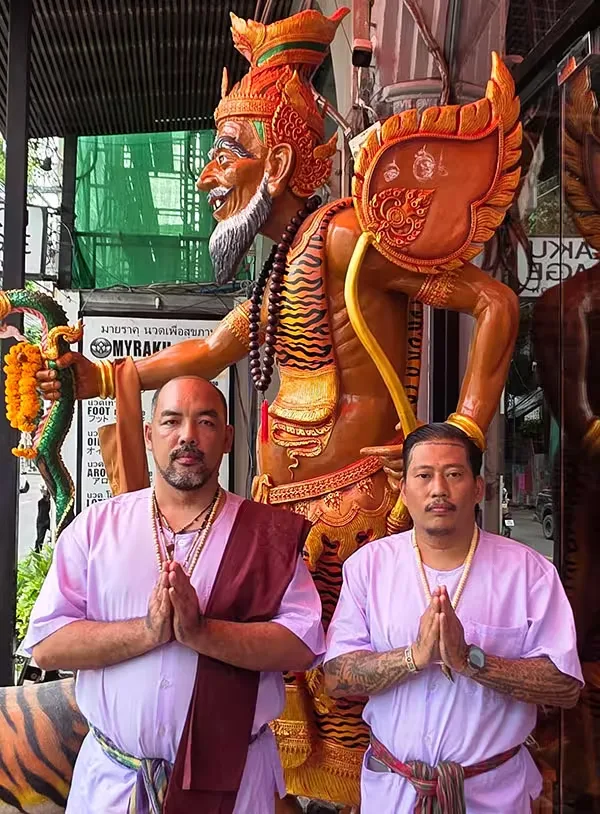
"Beginning with one man's fascination with this ancient art of tattooing, Bangkok Ink was born." It was not easy, the studio writes, to gain the trust of the Sak Yant masters he met, so Martin spent time with them and learned the history and origins of the practice.
He is frank about the early years: "When I first started, I worked with masters who really knew very little about Yants", self-taught men who wanted to learn. Today he is choosier: "I only listen to the top masters." And the Yants he wears himself? "Together, they keep me grounded and serve as constant reminders to be a good person."
With Patrick
A needle, practice skins, and a friendship
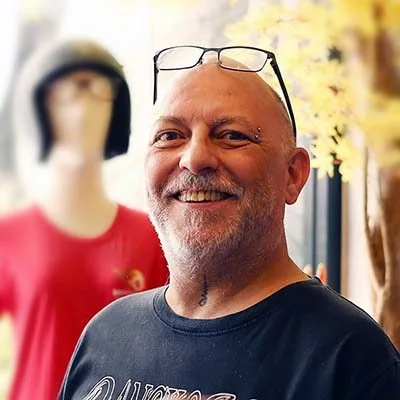
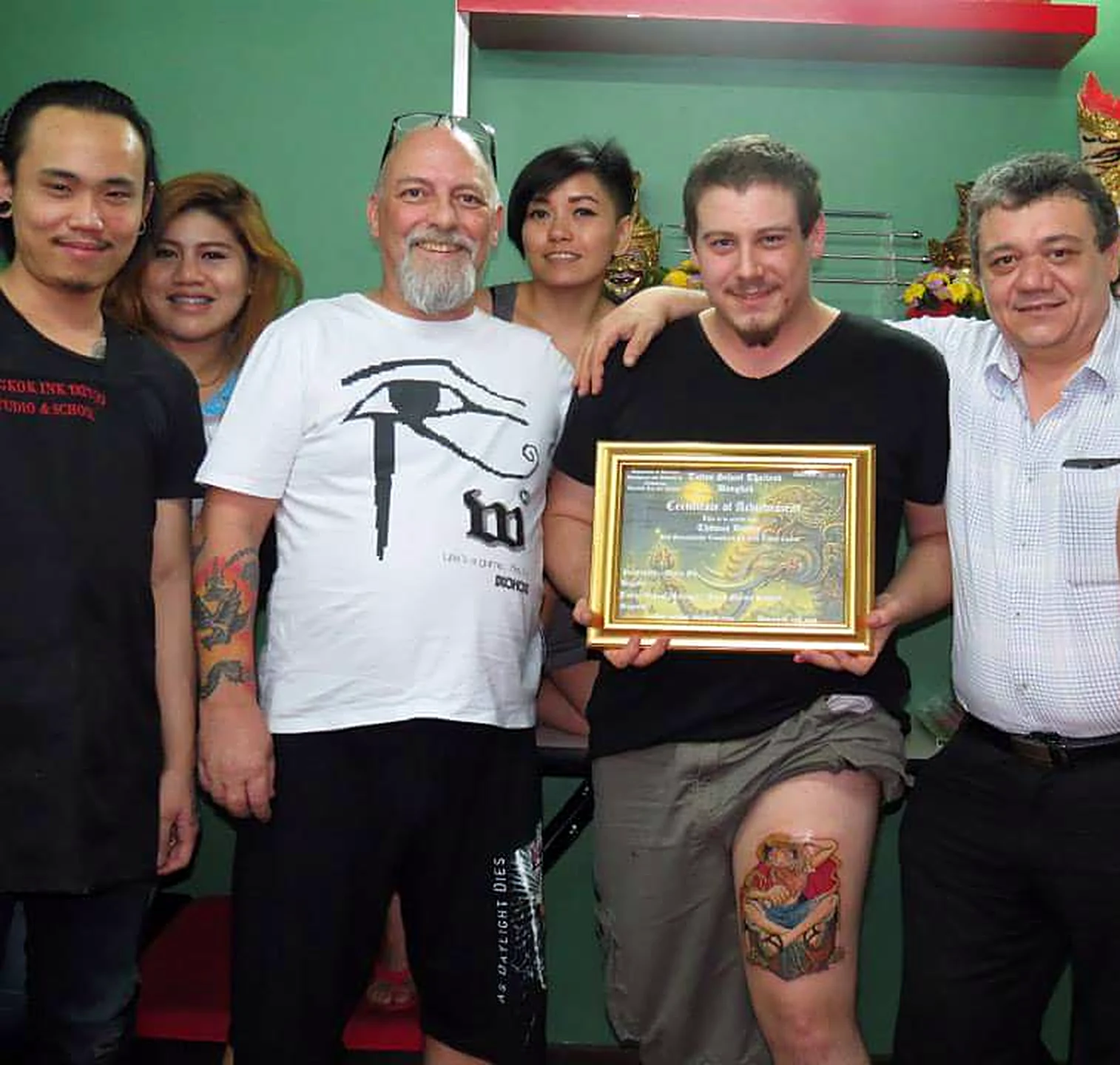
Patrick met Martin in 2015, when his son came to learn tattooing at the school. In Patrick's own words: "Together we revised and created a new type of Sak Yant tattoo needle, to ease the practice and keep it sterile."
"Martin also knew exactly what he was looking for in tattoo practice skins, and after a few trials in our factory at Poli, he found it. Martin has an engineering background, so he developed his own skins with me." The skins the school's students start on today.
Inside Bangkok Ink: The founder
In depth
More from Bangkok Ink
 Sak YantSak Yant, the sacred tattoo
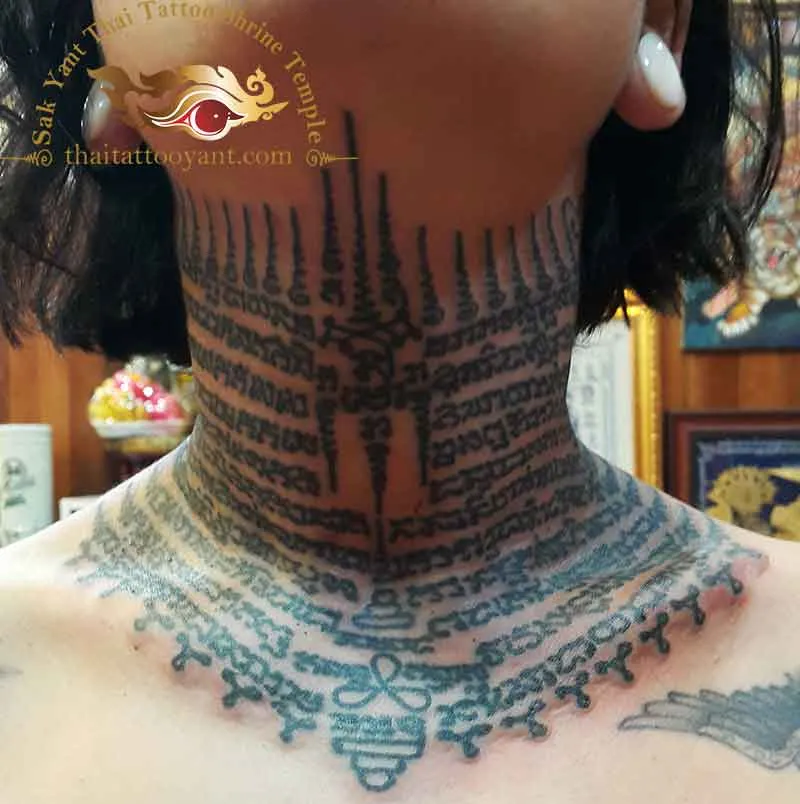
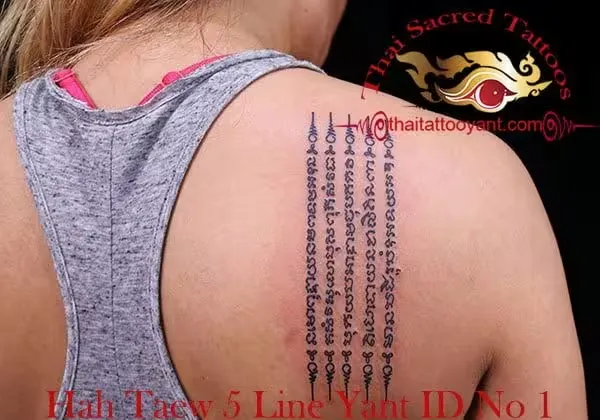
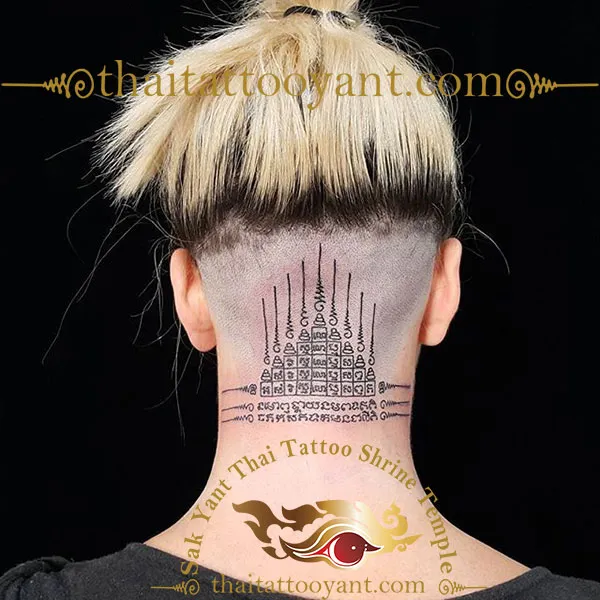
A Sak Yant is not chosen from a flash sheet. It is a sacred design in Kata script, tapped in by hand by a master, then blessed and activated, and it comes with promises you keep for life. Bangkok Ink has built its house around it. Here is what it means, how it is done, the designs and the rules, as Martin and his masters tell it.
Read more →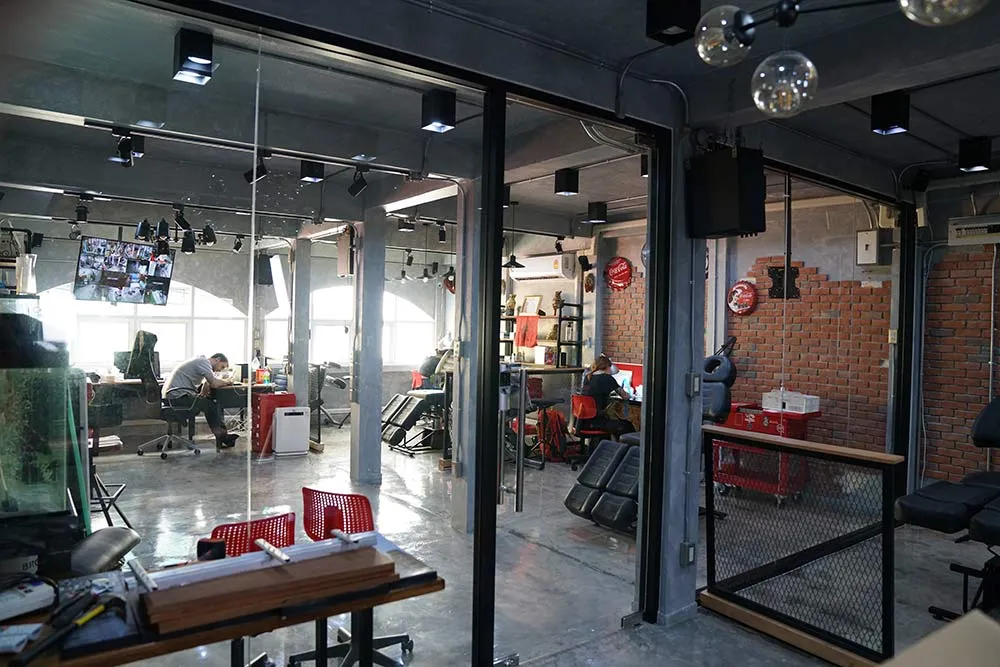 The schoolTattoo School Thailand
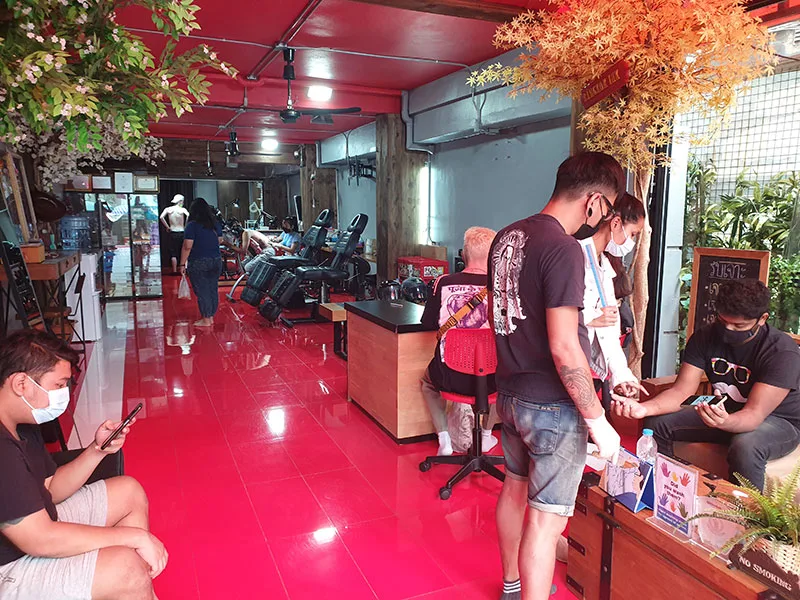
Bangkok Ink's school does not put you in a classroom. It puts you in a working tattoo studio on Sukhumvit 33, two students at a time, first on silicone skin, then on real models, five a week. Here is how a course runs, what it costs, and what its former students went on to do.
Read more →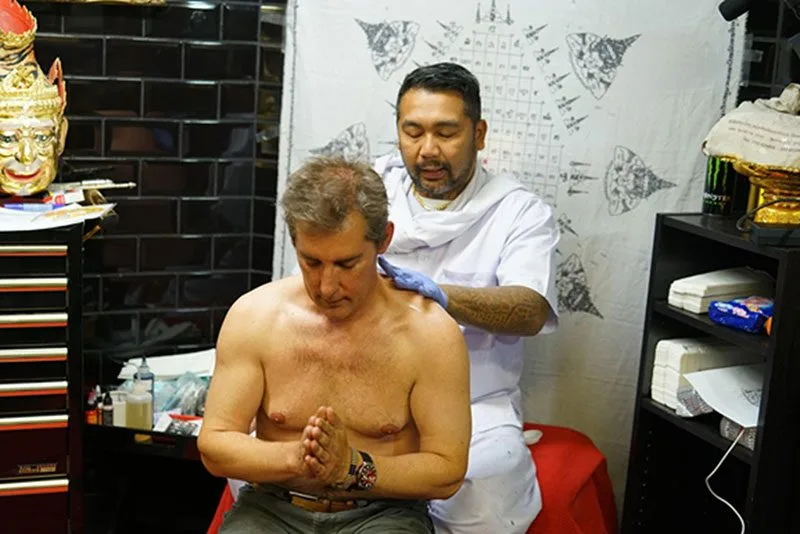 On tourSak Yant on tour
For over a decade Bangkok Ink has flown its Sak Yant masters to the people who cannot come to Bangkok: the USA, Australia, China, Sweden and, every year, the UK. The next tour brings Senior Master Ajarn Sak to Wigan and London in July 2027. Here is how a tour session works, from choosing your design to the gold leaf.
Read more →← Back to the full Bangkok Ink feature
Photos: Bangkok Ink. Words in quotes are the studio’s own. Prices and opening hours change: check with the studio before you go.