
Body Art WeeklyStudio of the Week · Bangkok Ink · The school
Tattoo School Thailand
Two students, one instructor, and a real studio full of real clients
Bangkok Ink, Sukhumvit 33, Bangkok, Thailand
The school
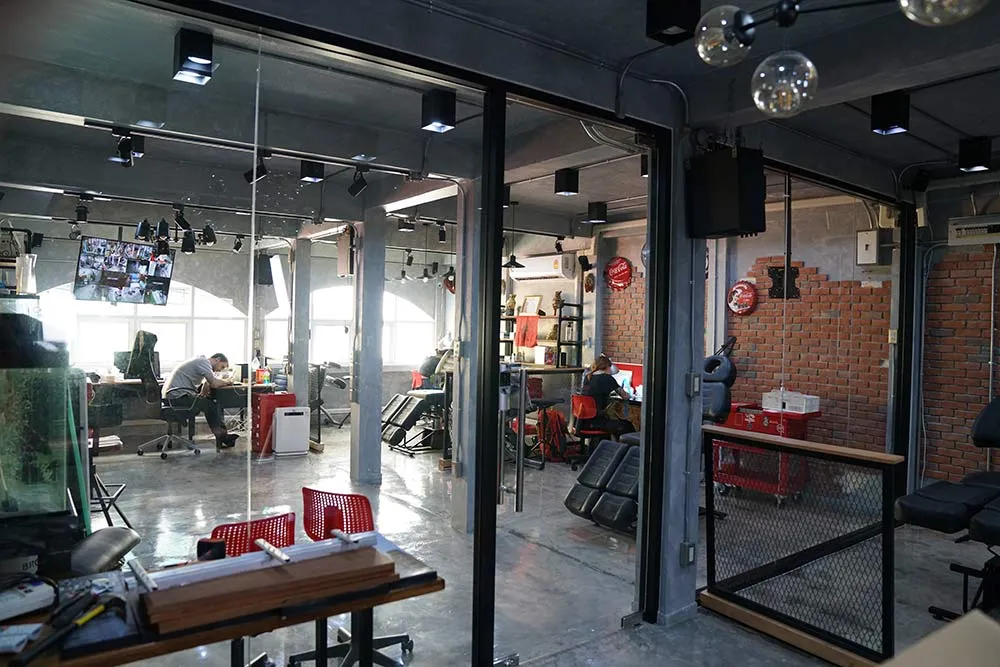
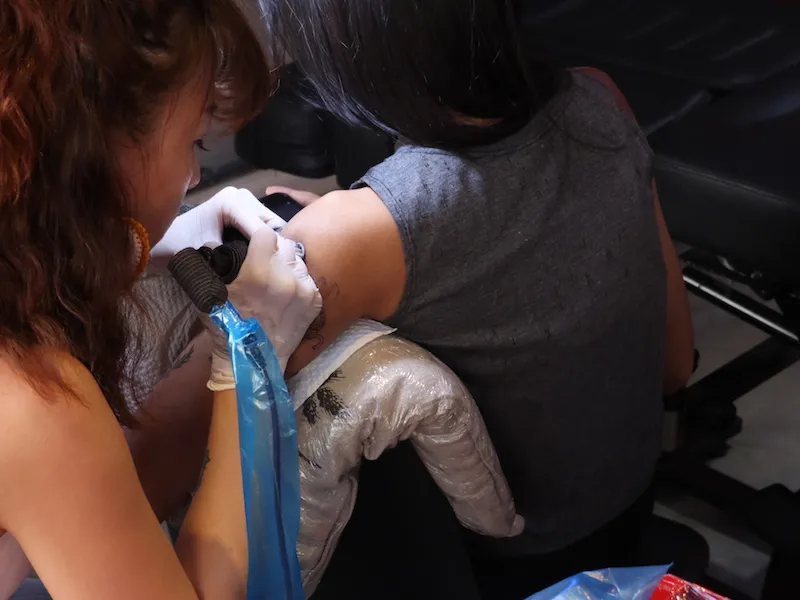
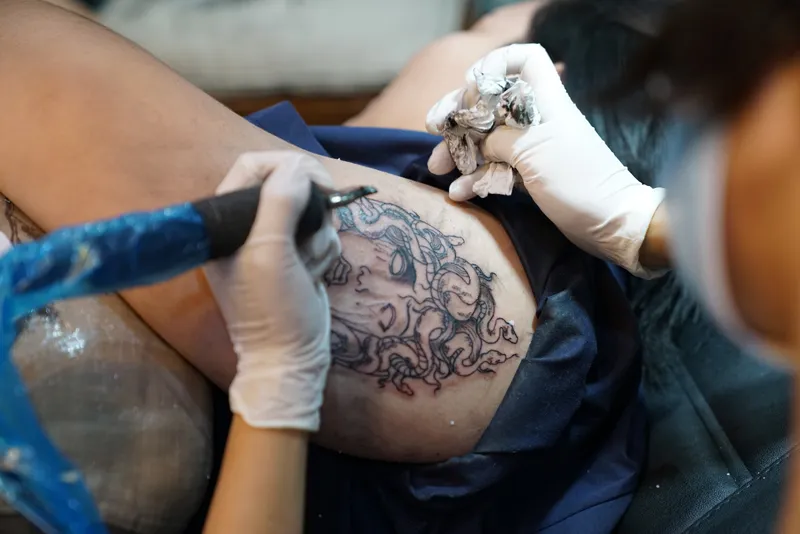
Bangkok Ink's school does not put you in a classroom. It puts you in a working tattoo studio on Sukhumvit 33, two students at a time, first on silicone skin, then on real models, five a week. Here is how a course runs, what it costs, and what its former students went on to do.
The way it works
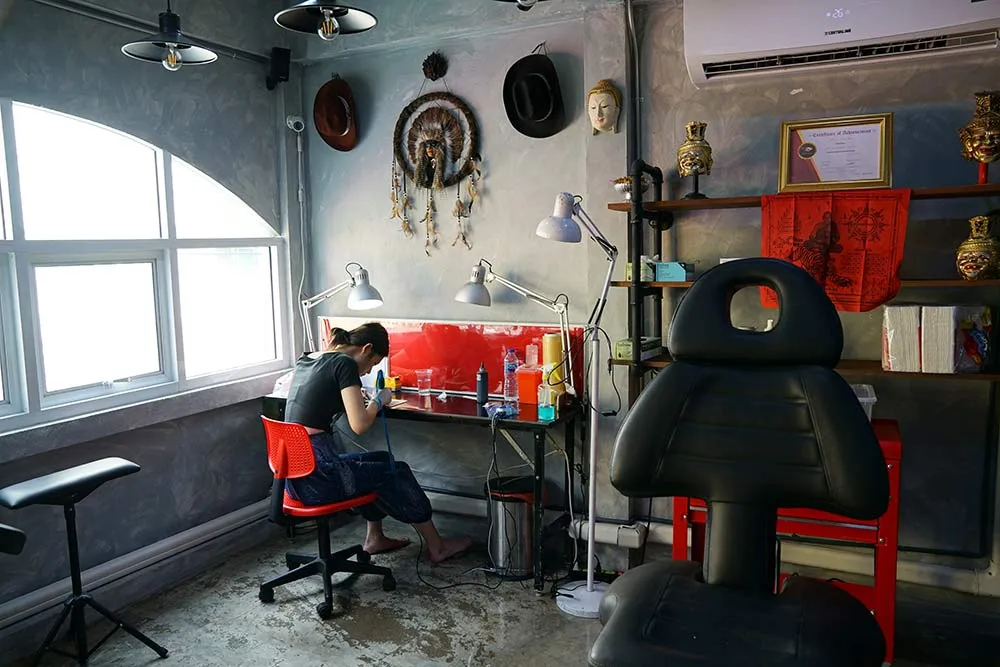
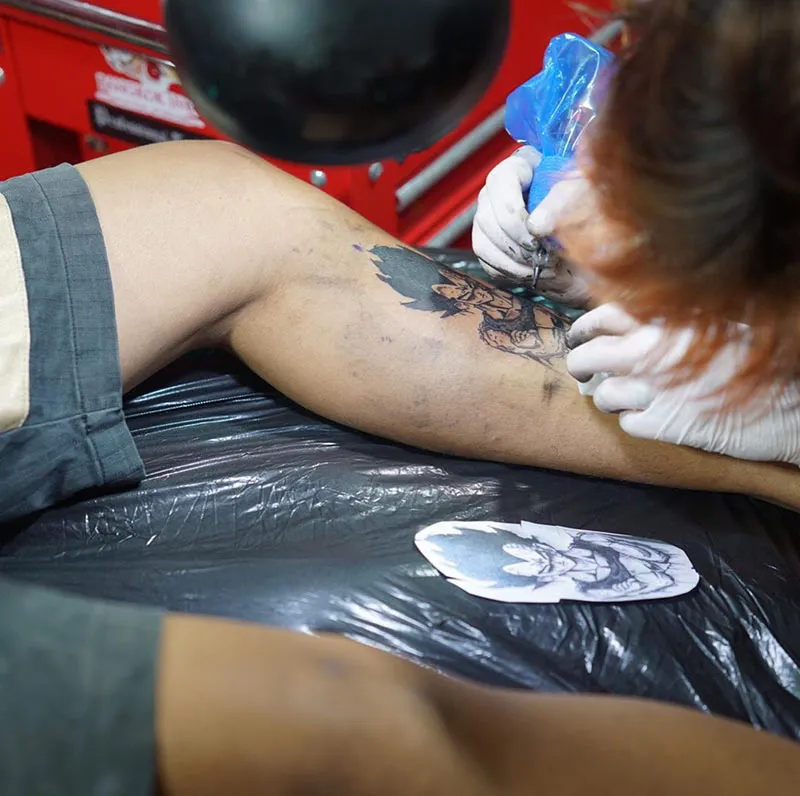
Not a classroom: a working studio
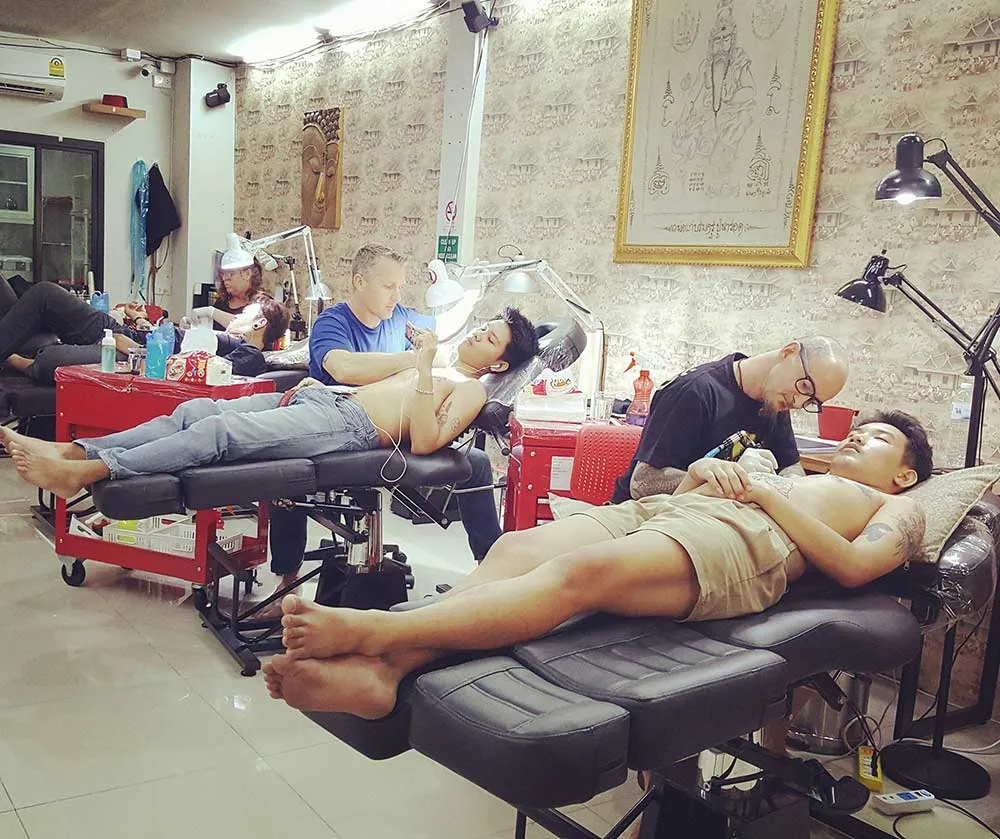
"We do not run classes in the traditional sense." Instead you get a workstation, a chair and an instructor on the floor of a busy studio, with real clients coming in and out all day. That is the point: you learn the trade the way it is actually done.
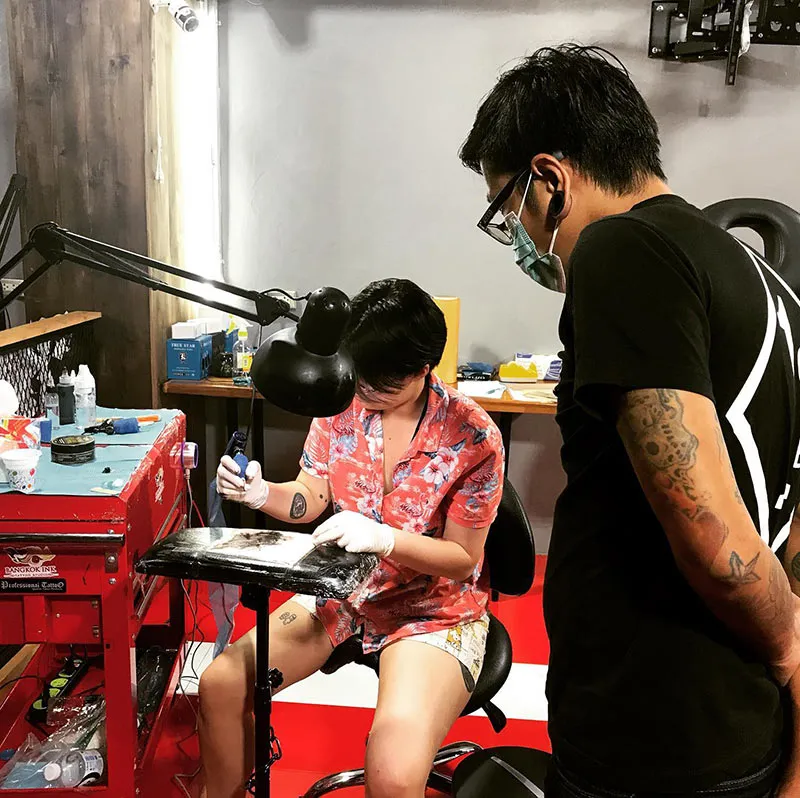
The school is honest about what one-on-one means. The instructor teaches you personally, but also has clients and another student to look after, so a lot of the work is yours. "You need to learn to operate as a tattooist on your own, so when you leave the school you can do tattooing alone as there will not be an instructor with you."
And a line we wish every school printed: "You will have to fit in with this environment, not the other way around." Tattooing is a service trade. The sooner you learn that, the better.
“Hard work and the love of tattooing does, and of course a good teacher helps.”
The courses
Three ways in
Most people start with the beginner course. The brave ones go for the bamboo course, taught by a real Sak Yant master. And tattooers who already know what they are doing come back for a "Tattoo Holiday": Bangkok by night, models by day.
Beginner
Two weeks, ten days Monday to Friday. Stencils, machines, the workstation, hygiene and safety, then models. "A great way to see if this really is the career path you want to take."
Bamboo hand-poke
Four weeks with a Sak Yant master: the traditional Thai way, from stencil to equipment and hygiene, fake skin first, then models. The hardest course in the building.
Tattoo Holiday
For returning students and working tattooers only. Chair, supplies and models provided, and the rest of Bangkok after hours.
Week by week
From fake skin to real skin
The school publishes its schedule, and it is refreshingly practical. Week one is the toolbox; from week two you tattoo people. "We understand everyone learns at different speeds so the schedule is not set strictly and will depend on you!"
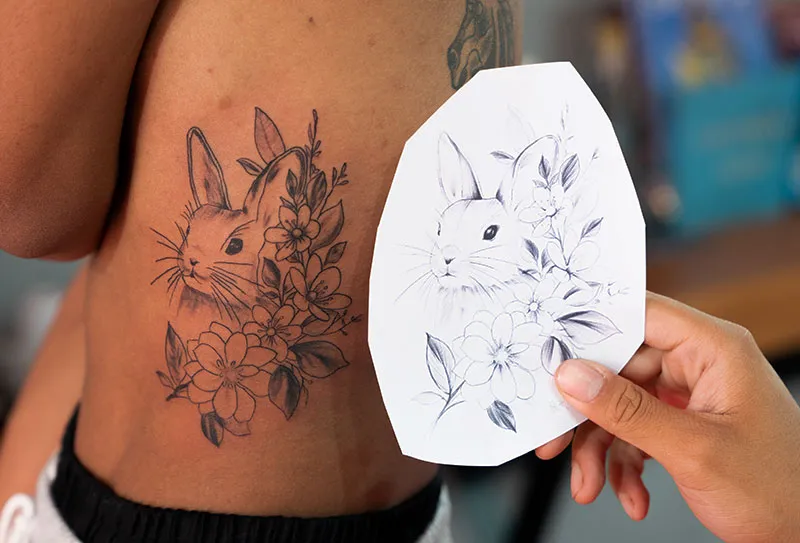
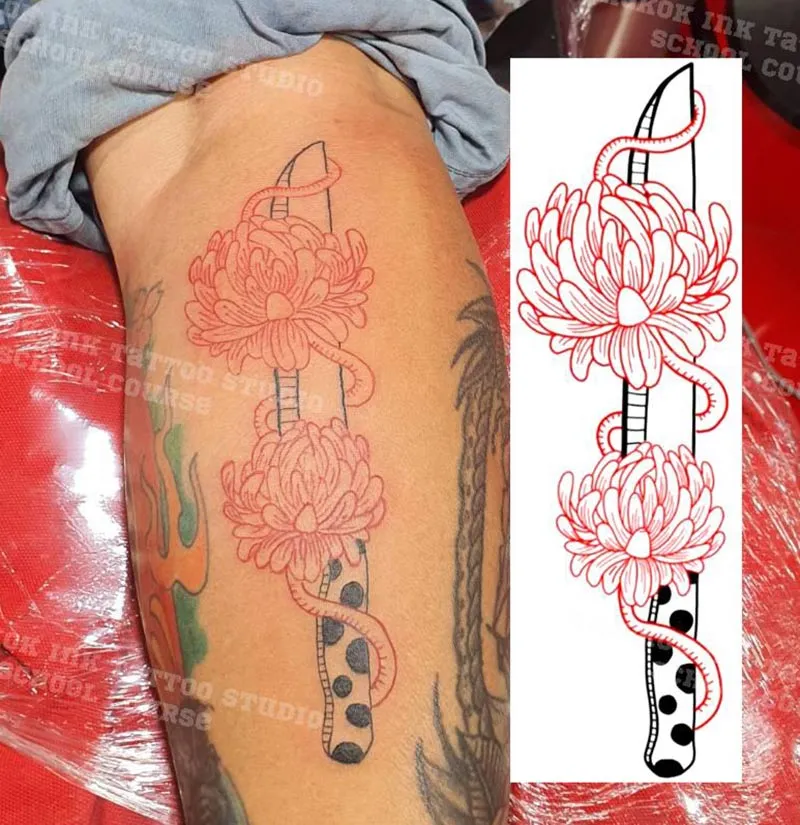
The stencil comes first, drawn by hand, because "a stencil is like a tattooist road map". Then at least four days on silicone, which, the school admits, is hard to make beautiful tattoos on, but teaches the process. The models choose their own designs, and the school matches them to your level. Just like real life: "When you are a tattooist you will have to tattoo what the client wants, not what you want."
1. Stencils
Made by hand first, to understand the design. Printers come later.
2. The workstation
How their artists set up, and why. Find your own way, as long as it is clean and organised.
3. The machine
You start on coil machines, then meet rotaries. Try both, keep what suits your hand.
4. Silicone skin
At least four days, as much as you like. The school's practice skin is the one Martin developed with Patrick.
5. Models
Weeks two to six: five models a week, Monday to Friday, with almost all day for each. No rush.
Living there
The school that never closes (except Sundays)
"We live on the premises so you don't have to stop training when the studio is closed, only on Sundays." Students can stay at the school, and the school prefers it: "Students who stay off the premises sometimes get distracted."
It seems to work. One student has come back eight times, another stayed a year, and by the school's account some arrive from other schools "as they do not want to go back there". What should you bring? "An open mind and a good attitude!" Food is not included, and you will not need it to be: Sukhumvit has everything from street food to Italian, and "Food is everywhere here, maybe one of the best things about Thailand!"
The price
One price, published
Tattoo School Thailand prints its prices, which in this business is half the battle. Payment is in Thai baht, the deposit secures your dates and is not refundable, but they let you move the dates if there is room. The rest can be paid in cash, by bank transfer, PayPal or card.
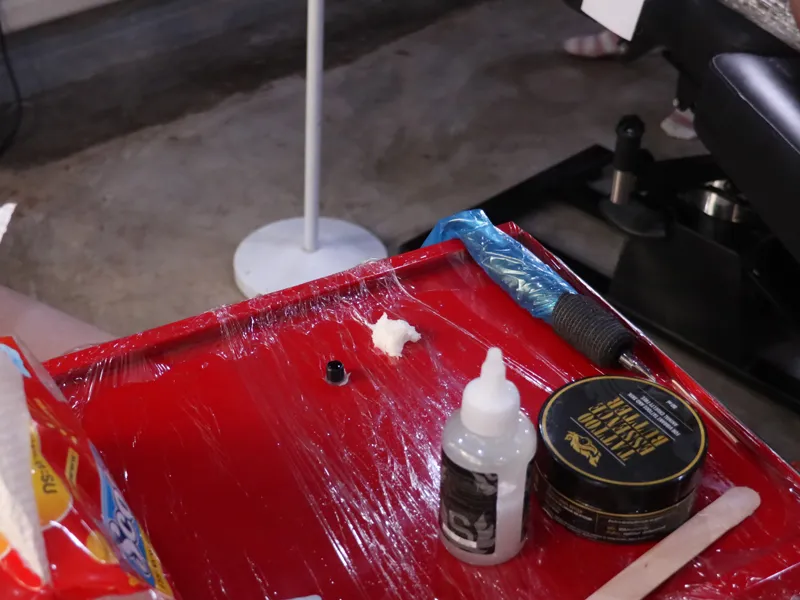
The fee covers the studio during set times, your own workstation and chair, computer access, English-speaking staff, "new modern machines and supplies", and everything the tattoo process uses. Prices as published on the school's price page:
2 weeks
45,000 THB (about USD 1,300). The minimum for beginners.
3 weeks
67,500 THB (about USD 1,900).
4 weeks
90,000 THB (about USD 2,600).
5 weeks
112,500 THB (about USD 3,200).
6 weeks
135,000 THB (about USD 3,900).
Where they went
From student to studio owner
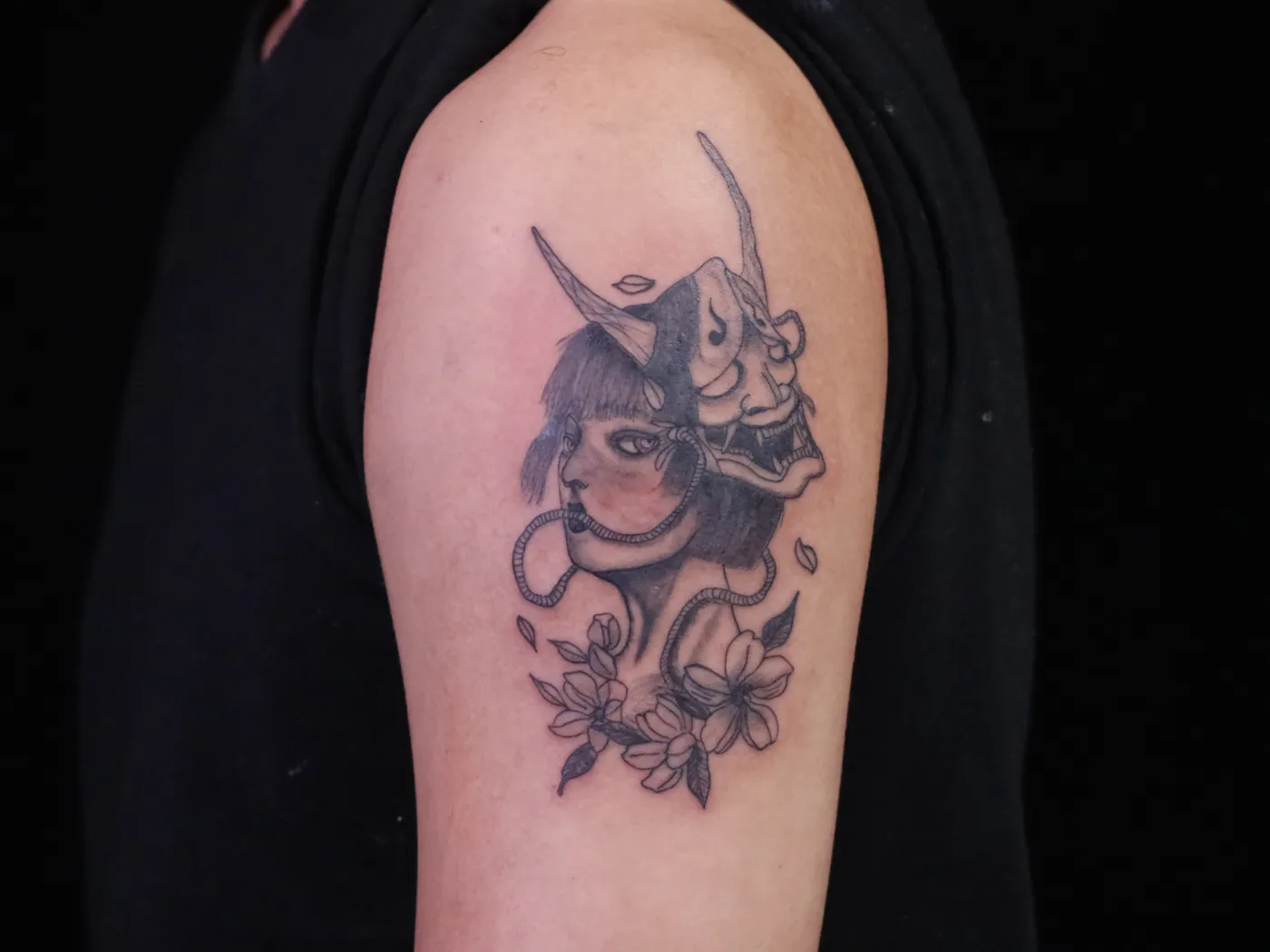
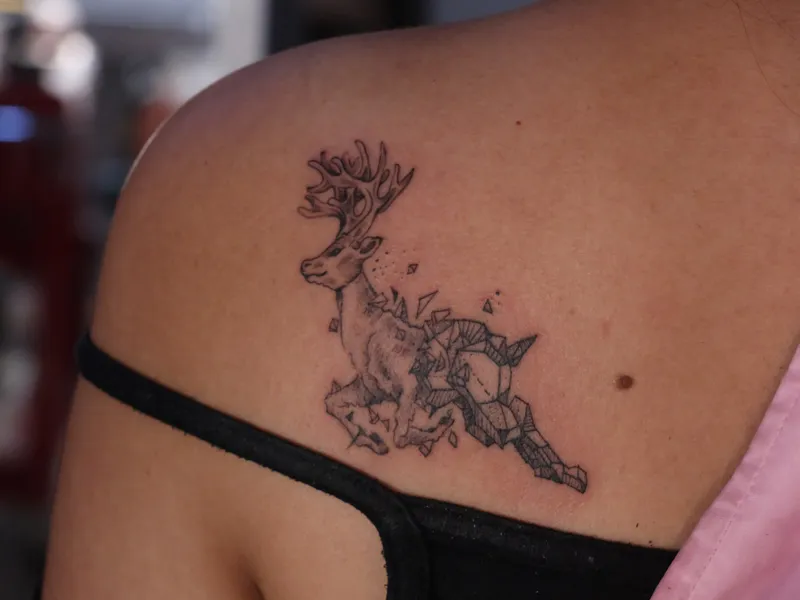
The school keeps a page of former students who now run studios of their own, from the Netherlands to Malta, Sweden and the USA. Here is some of their work today:
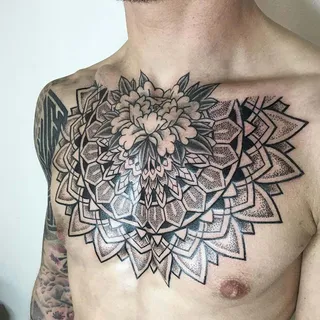 James Nidecker
Netherlands. Course in 2013, his own studio the next year.
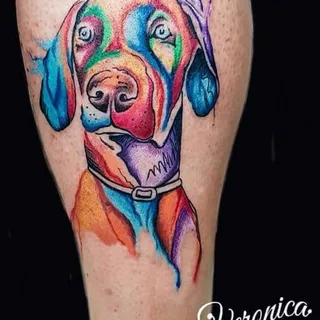 Veronica Lee
From Canada, course in 2012, her own studio in Malta by 2013.
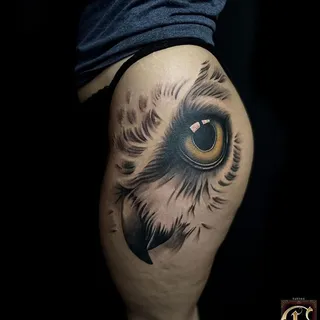 Carl Liljeros
Sweden. Course in 2015, opened Skin Diver the same year.
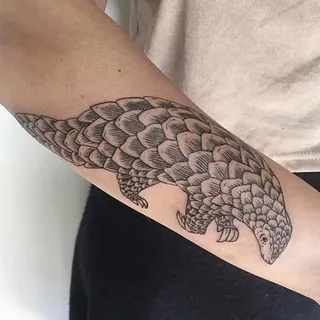 Anna Sica
USA. Course in 2011, Arrowhead Tattoo the same year.
Good to know
Your questions, their answers
How many students are there?
"Two only. We find this the best way for you. You will be able to focus more and get the most out of your time with us."
Do I need to be an artist?
"Not necessarily, there are two kinds of tattooist, a tattoo artist and a tattooist." A tattoo artist draws their own designs; a tattooist applies designs already made. Basic drawing skills are expected, and the school says it plainly: practise drawing before you come.
Will I tattoo real people?
"Most students will do the first week on silicone and move onto tattooing models in their second week." If a model cancels, the school finds a replacement, or gives you two models in one day, or one on Saturday.
Can I learn a specific style?
"We do not teach specific styles we teach the correct way to apply a tattoo. There's no point in doing a full sleeve in water color if you struggle to apply a simple design first."
What language is the course in?
English, with a few other languages spoken. Students with limited English are accepted, with help from translation apps, but the school asks for patience when the studio is busy.
What are the hours?
By the school's FAQ, usually 11am to 6pm, Monday to Friday, finishing around 7pm on model days. Sunday is the day off.
Can I bring my own models?
Not people you just met. Close friends or family travelling with you are fine, if you tell the school first, because models are booked in advance.
Do I get a certificate?
"You will receive a certificate on completion of the course." A two-week course gives an introduction to tattooing certificate. The school's advice: check with your own country's rules.
Can I visit first?
"Of course! If you are in Bangkok come by and show your interest!" Bookings are made by email.
Inside Bangkok Ink: The school
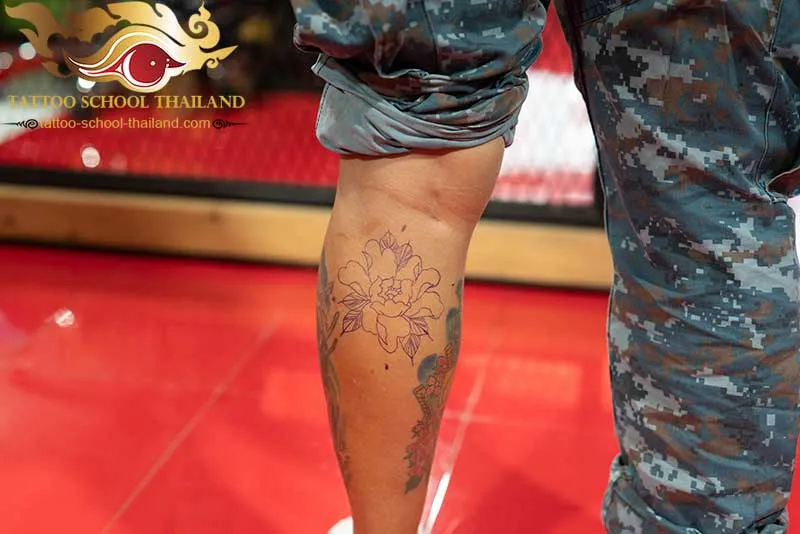
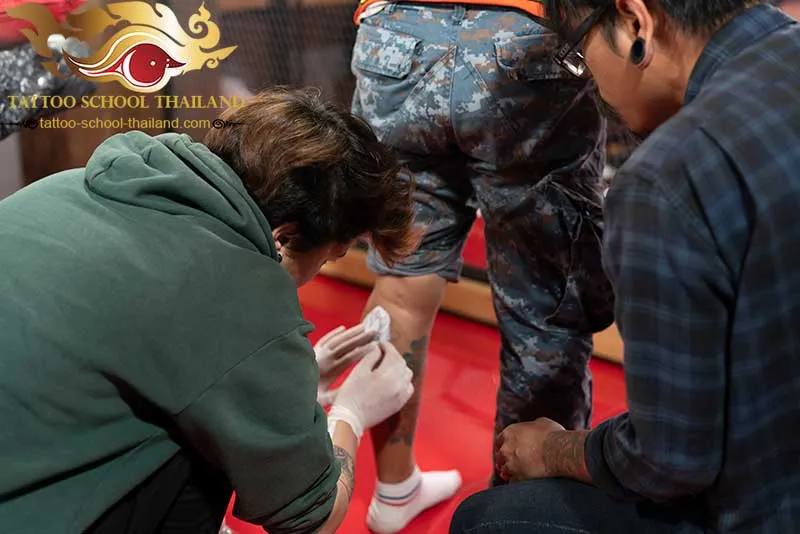
In depth
More from Bangkok Ink
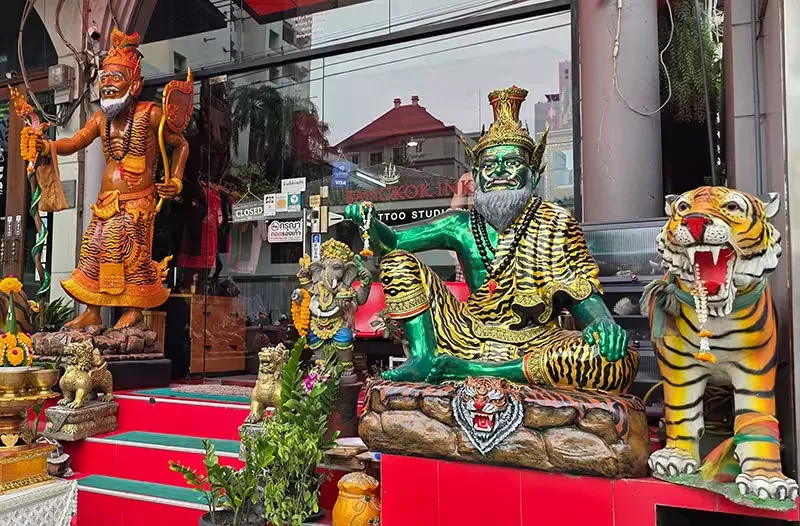 Sak YantSak Yant, the sacred tattoo
A Sak Yant is not chosen from a flash sheet. It is a sacred design in Kata script, tapped in by hand by a master, then blessed and activated, and it comes with promises you keep for life. Bangkok Ink has built its house around it. Here is what it means, how it is done, the designs and the rules, as Martin and his masters tell it.
Read more →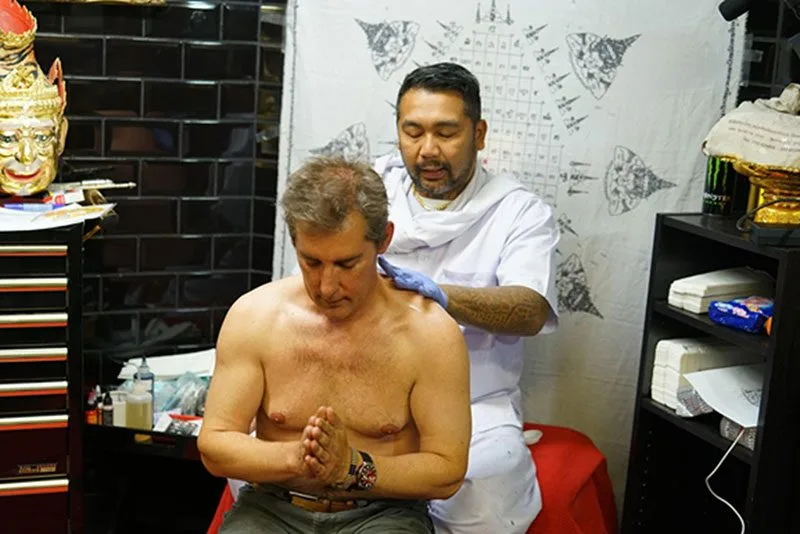 On tourSak Yant on tour
For over a decade Bangkok Ink has flown its Sak Yant masters to the people who cannot come to Bangkok: the USA, Australia, China, Sweden and, every year, the UK. The next tour brings Senior Master Ajarn Sak to Wigan and London in July 2027. Here is how a tour session works, from choosing your design to the gold leaf.
Read more →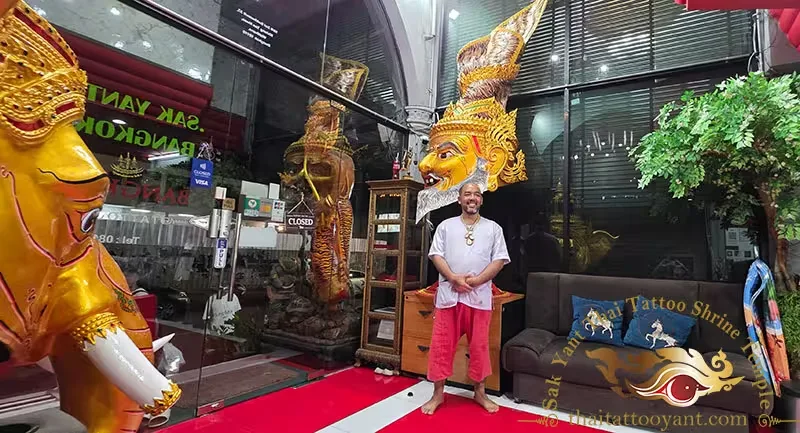 The founderMartin's Thailand
Long before Bangkok Ink, Martin Kendall lived in Thai villages, from the deep south to the North-East and the Cambodian border, and watched Sak Yant do its work in everyday life. He wrote it all down on his Sak Yant site. Here are his stories, in his own words, and the friend who made a needle with him.
Read more →← Back to the full Bangkok Ink feature
Photos: Bangkok Ink. Words in quotes are the studio’s own. Prices and opening hours change: check with the studio before you go.