 Cover story
Ask what stays in the skin
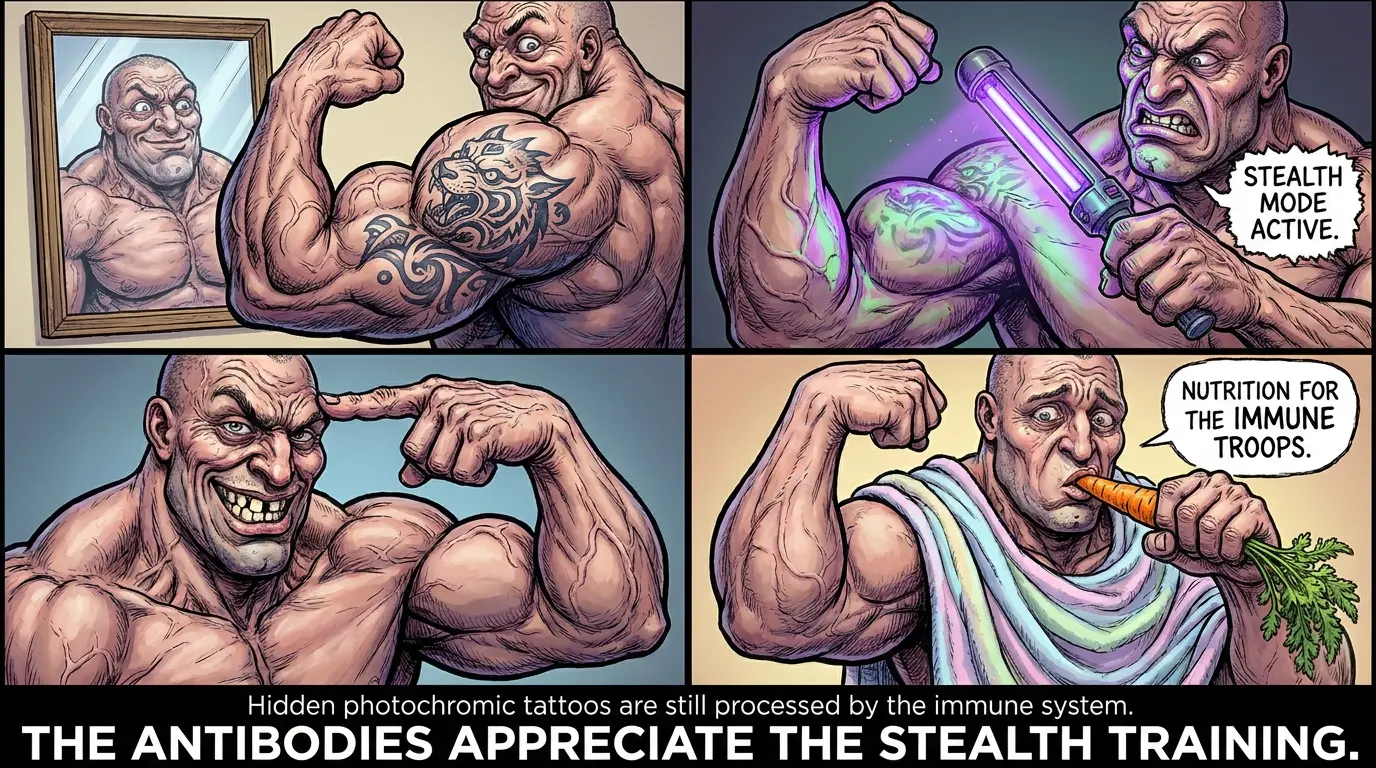
The new light-switching tattoo ink is being passed around online as the answer to regret, but the pigment does not leave when the colour does. Light changes how the particles look, and the particles stay in the dermis, where the body has to live with them. PhotoTat is still research, and the reporting says plainly that safety in humans has not been established. A tattoo you cannot see is still a tattoo, which means the useful question is what stays in the skin and what that material does over time.
The same mistake runs through the week. On a phone, a clip-on ring and a dermal anchor in the hand look alike, although one comes off and the other is an implant in a part of the body that never stops moving. "G23 titanium" now runs from about 52 cents to nearly 7 dollars a piece on Chinese wholesale listings, because ASTM F136 is a material standard and does not vouch for the threads, the polish or the paperwork. And a gold end on a titanium post makes a small galvanic cell that nobody can see.
So judge the material and not the picture. If a client brings you a switching tattoo, tell them it is still research and not a product, and that vanishing is not removal. When you buy titanium, ask for the batch documents before you compare prices. When a client wants a new end, check what the post is made of. And when a stretch meets resistance, pain or bleeding, stop and go back to the last comfortable size, because the next size can wait and a torn lobe cannot be hurried.
 Viral
 Market
 Science
 Science