 Cover story
Licensed Space, Real Standards
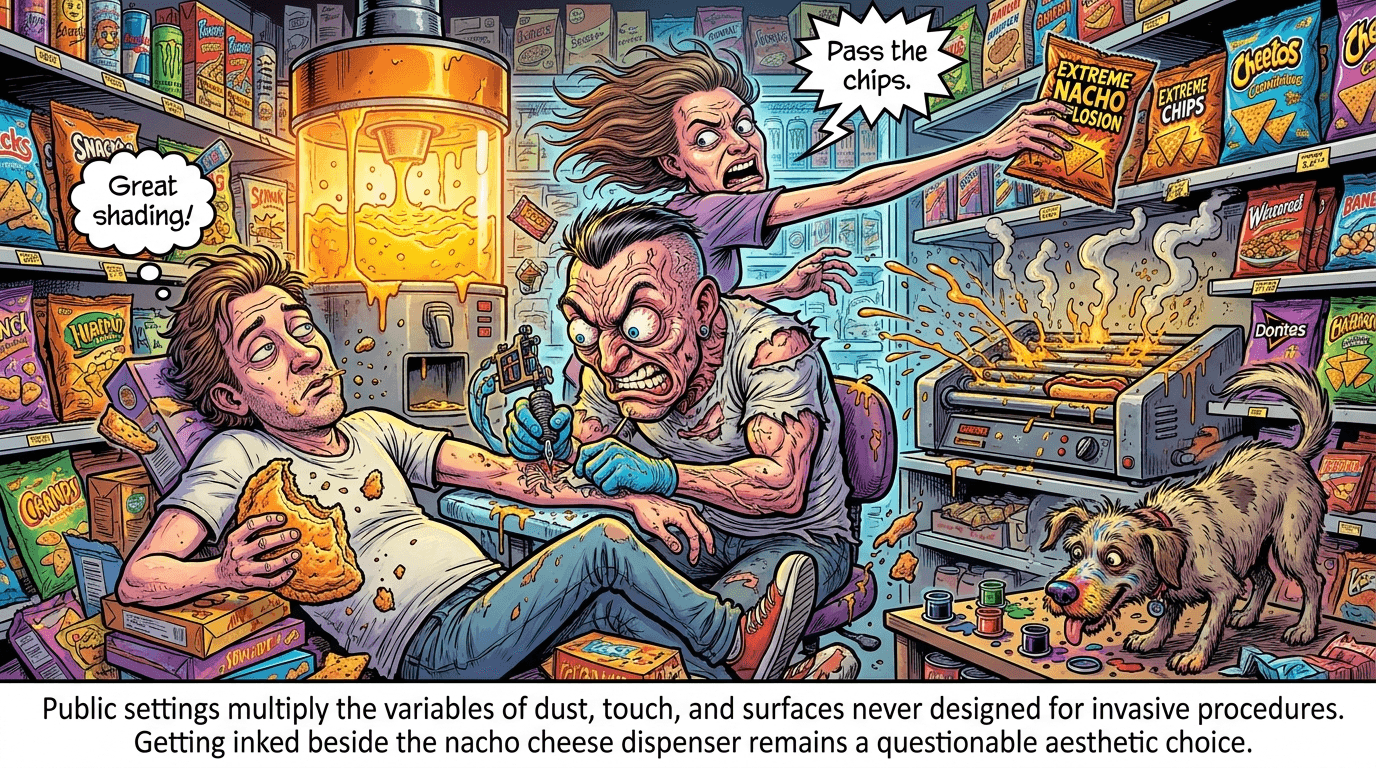
The Green Bay gas-station tattoo video was staged, but the health department's response wasn't. When Brown County Public Health issued its warning, they weren't reacting to fiction, they were naming something real: unlicensed tattooing happens, it carries genuine risks, and it's illegal. A licensed studio has routines, inspections, equipment standards and training behind it. Between gas pumps, none of that exists. The video made the stakes visible because it made the absence of safeguards obvious.
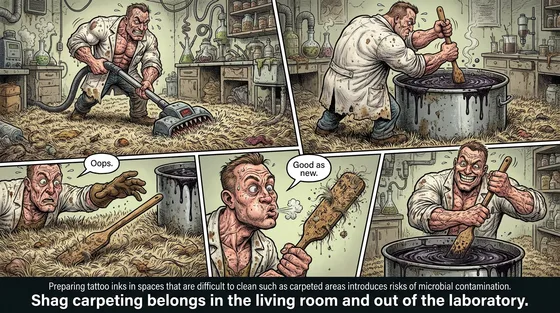
Regulation keeps tightening around what we use and how we work. The 2026 meta-analysis found no significant link between tattooing and skin cancer, yet regulatory frameworks like REACH and MoCRA still restrict ink substances on hazard grounds. The FDA's latest focus isn't on banning new pigments, it's on contamination control, lot traceability and microbiological testing, which means every studio now carries the burden of proving their supply chain is clean. Standards exist because people deserve to know what's safe.
This matters because studios already face a margin squeeze from rent, utilisation, compliance and consumables. Adding rigorous contamination protocols costs money, but the alternative is the kind of uncontrolled work that the gas-station video illustrated. Licensed space isn't just a legal requirement, it's where the infrastructure sits that keeps people safe. We publish these plates and files because studios need tools to run professionally. That's the foundation everything else rests on.
 Regulation
 Regulation
 Regulation
 Market
 Science